

The company is leveraging strategic partnerships with Mahindra and Adani to promise local manufacturing, MRO facilities, and a broader aerospace ecosystem aligned with India’s Aatmanirbhar Bharat vision.
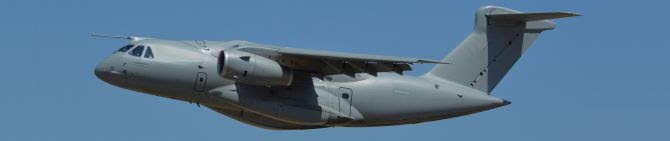
Brazilian aerospace giant Embraer is making a strong pitch to win the upcoming tender for the Indian military’s transport aircraft program, with its KC-390 Millennium competing directly against Lockheed Martin’s C-130 Hercules.
The Request for Proposal is expected to be issued later this year, and Embraer views India as a strategic market in its global expansion drive. The KC-390, which has already been adopted by several NATO members, is being promoted as a modern, cost-efficient platform designed in the 21st century to meet diverse mission requirements.
Embraer has partnered with the Mahindra Group to manufacture the KC-390 in India and establish a local Maintenance, Repair, and Overhaul (MRO) capability if selected by the Indian Air Force. This collaboration is intended to provide comprehensive sustainment solutions, including base and heavy maintenance, avionics support, and training, thereby enhancing operational readiness and reducing dependence on foreign facilities.
The proposed MRO hub would also serve as a regional centre for other KC-390 operators, creating skilled employment opportunities and strengthening India’s aerospace ecosystem.
In parallel, Embraer has formed a strategic partnership with Adani Defence & Aerospace to establish a manufacturing ecosystem in India. In January, Adani signed a Memorandum of Understanding with Embraer to develop an integrated regional transport aircraft ecosystem.
This collaboration aims to cover aircraft manufacturing, supply chain development, aftermarket services, and pilot training. The partnership envisions an assembly line with a phased increase in indigenisation to advance India’s Regional Transport Aircraft programme, supporting both the Aatmanirbhar Bharat initiative and the UDAN regional connectivity scheme.
A key feature of this industrial partnership is the proposed Final Assembly Line for the E175 regional jet, planned for the Dholera Special Investment Region in Gujarat. Embraer aims to secure firm orders for over 200 aircraft to officially launch this assembly line.
The project would leverage Embraer’s engineering expertise and Adani’s aviation infrastructure, which spans airports, aerospace manufacturing, MRO services, and pilot training. This initiative underscores Embraer’s ambition to integrate deeply into India’s aviation value chain.
Embraer already has a notable presence in India, with nearly 50 aircraft and 11 types operating across commercial, defence, and business aviation. The Indian Air Force operates Embraer’s Legacy 600 aircraft and the NETRA AEW&C platform based on the ERJ145. In the commercial sector, Star Air operates a fleet of 13 E175 and ERJ145 aircraft.
Embraer’s eVTOL subsidiary Eve is also exploring urban air mobility in India, working with JetSetGo to implement Vector, an urban air traffic management software, and partnering with Hunch Mobility to study electric commuter flights in Bangalore.
The KC-390 Millennium is being marketed as a versatile, multi-mission aircraft capable of cargo and troop transport, medical evacuation, firefighting, and aerial refuelling. With a payload capacity of 26 tonnes, it offers higher speed and mission efficiency compared to the C-130J’s 19 tons.
Embraer claims the KC-390 delivers up to 30% lower operational costs per mission, while its modern design ensures compatibility with NATO standards and Western supply chains. The aircraft has demonstrated a mission completion rate above 99%, reinforcing its reliability.
India’s decision will hinge not only on aircraft performance but also on industrial partnerships, technology transfer, and long-term sustainment. Embraer’s dual strategy of offering a modern transport aircraft alongside a comprehensive industrial ecosystem positions it as a strong contender in the competition.
ET Defence
