

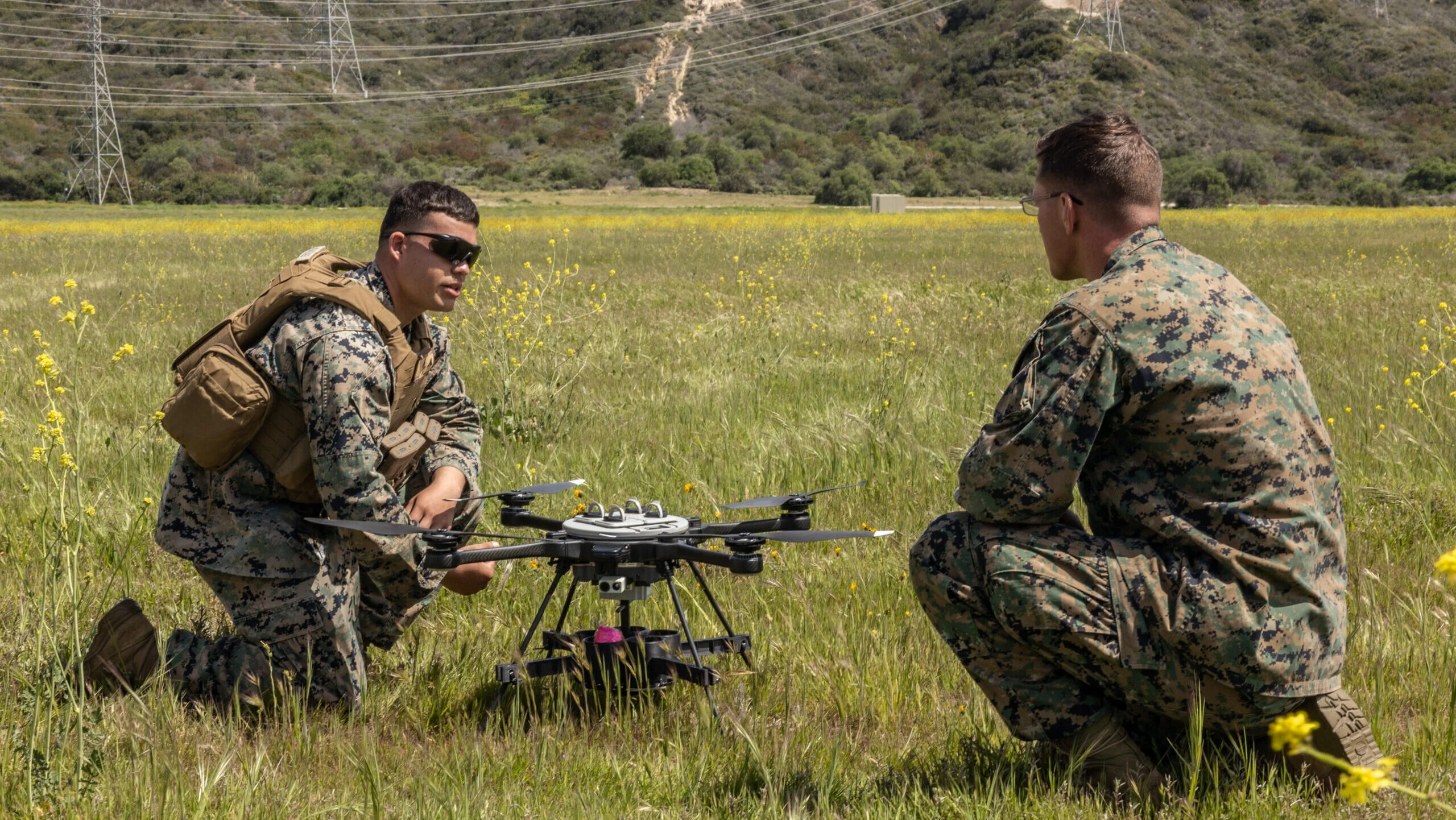
WASHINGTON — As part of its Drone Dominance initiative, the Pentagon has named five winners of a “lethality” challenge, a title that could place them ahead of other vendors in the race to snag deals to arm small drones.
On the competition’s website, the Pentagon announced that Bravo Ordnance, Kela Defense, Kraken Kinetics, Mountain Horse and Northrop Grumman have all been named winners of the recent Lethality Prize Challenge. In early April, the department announced the Lethality Prize Challenge on Sam.gov, hoping to find payloads for Group 1 drones, those weighing 20 lbs. or less.
“Solutions must be scalable to match the rapid growth of Drone Dominance platforms and cost-effective to enable mass production and fielding,” the government wrote. “At this point, the lethal payload system represents a significant portion of the total system cost; therefore, affordability and manufacturability are critical design considerations.”
While a department spokesperson didn’t provide additional details about the competition, two of the winning companies said the selection could expedite contracts and certification pathways.
In a press release today, for example, Northrop said being deemed a winner actually secures a role as a “preferred” provider to “identify and scale advanced payloads capable of complementing the rapidly growing production of small drones.”
“Northrop Grumman’s selection positions the company as a vital partner for this initiative, and the company will deliver its proven, standardized Common UAS Payload — an off-the-shelf fuze and effects module,” the company added.
Over at Bravo, Chief Strategy Officer and General Counsel Kevin Landtroop said the company entered its HitchHiker into the challenge — a 2.5 kg (5.5 lb.) munition that is compliant with the Picatinny Common Lethality Integration Kit for weaponizing low-cost, attritable drones.
“We’re an 18-month old hardware startup. This is our first scaled product,” Landtroop wrote in a short email to Breaking Defense today. By winning a challenge spot, he added, the HitchHiker can now be expedited through the safety review process, sailing through in eight weeks instead of months or years.
“And, DDP [the Drone Dominance Program] is purchasing 60,000 units in Phase 2,” Landtroop wrote. “[The] Lethality Challenge selection gives us a rail-locked pathway to thousands or tens of thousands of unit orders for this product, which has absolutely changed the caliber of discussion we’re having with investors, suppliers, other customers/partners, etc.”
The remaining three winners did not immediately respond to Breaking Defense about the competition or which lethality payloads they competed with.
In mid-2025, Defense Secretary Pete Hegseth unveiled a series of directives designed to “unleash” use of small drones and supercharge the defense industrial base. As part of this Drone Dominance push, the department wants to spend roughly $1 billion purchasing small, lethal drones within a two-year window, while Army leaders work to meet the Oct.1 deadline to field some of these small, one-way attack drones to every squad.
The lethality portion of the Drone Dominance competition follows the first “gauntlet” competition for small aircraft themselves. In February, the DoD announced 11 firms who participated in the gauntlet would receive orders, with another guantlet planned for later this year.
In March, Travis Metz, the Pentagon’s program manager for the Drone Dominance program, told lawmakers the Pentagon is set to order 30,000 one-way attack drones “over the next few days” as it determines the first winners of its Drone Dominance initiative.
