

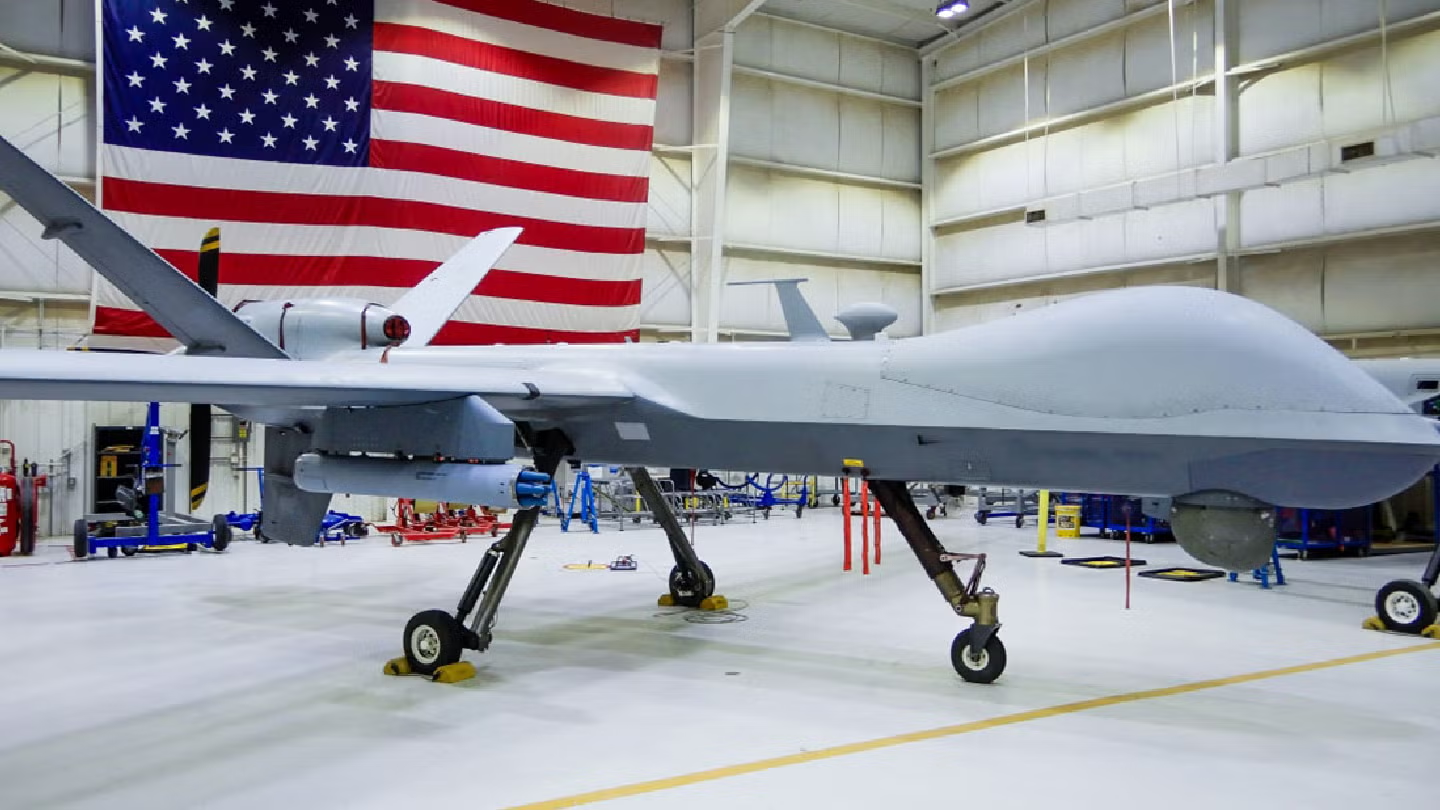
General Atomics Aeronautical Systems (GA-ASI), working with the US Air Force (USAF), has completed flight tests of the Advanced Precision Kill Weapon System (APKWS) on the MQ-9A Reaper remotely piloted aircraft.
The MQ-9A is produced by GA-ASI and is currently in service with a number of organisations worldwide.

Discover B2B Marketing That Performs
Combine business intelligence and editorial excellence to reach engaged professionals across 36 leading media platforms.
The tests took place at the Nevada Test and Training Range and involved several shot profiles, including live launches at aerial targets.
MQ-9A crews used laser-guided rockets and a specialised launcher in all test launches.
This testing process responded directly to operational technology adaptation requirements, according to the companies involved, and was moved from initial planning through to flight test in an accelerated timeframe.
GA-ASI president David R. Alexander said: “We recognise the value that a system like APKWS brings to the MQ-9 aircraft as a tool to counter one-way attack drones.
“APKWS can increase the number of weapons the MQ-9A is able to carry, as well being able to carry new lower cost weapons.”
The MQ-9A Reaper, originally developed by GA-ASI with internal funding, first flew in 2001. It is a multi-mission, turboprop-powered aircraft and represents a weapons-capable evolution of the earlier Predator platform.
The name “Reaper” was given by both the US and Royal Air Forces, and is now used globally to denote the Predator B model equipped with weapon systems.
With more than 27 hours of endurance, the MQ-9A is able to sustain flight at altitudes up to 50,000 feet and achieve speeds of 240 KTAS. Its total payload capacity is 1,746 kilograms (kg), which includes the ability to carry up to 1,361kg of external munitions.
GA-ASI states that the MQ-9A features a fault-tolerant flight control system and a triple redundant avionics system architecture designed to ensure reliability.
The Honeywell TPE331-10 turboprop engine powers the aircraft and features Digital Electronic Engine Control to enhance performance and fuel efficiency, especially at lower altitudes.
The platform is configurable for a range of mission payloads. These include electro-optical/infrared sensors, multiple radar options such as Lynx multi-mode and maritime surveillance radars, electronic support measures, laser designators and a variety of armament packages.
The MQ-9A is further available in an Extended Range variant, which features removable wing fuel pods and a reinforced landing gear, enabling a flight endurance now increased to up to 34 hours.
Operators of the MQ-9A include the US Air Force, NASA, the Department of Homeland Security, and air forces in the UK, Italy, France, and Spain.
Last month, the US Navy’s Naval Air Systems Command selected GA-ASI for its Collaborative Autonomy Mission Planning and Debrief (CAMP) initiative. The project is set to enhance mission planning and autonomy frameworks, with a government-sponsored demonstration aimed at a 2026 Fleet exercise.

