

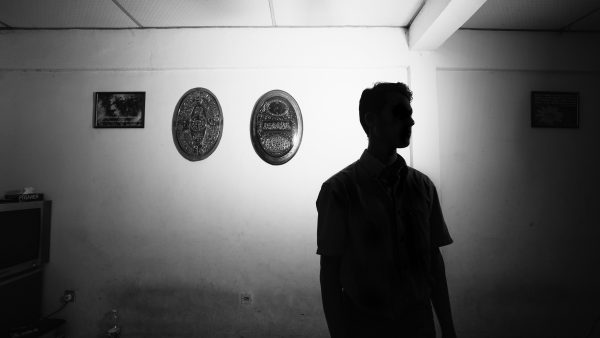
Until the celebration of the Muslim festival Eid al-Adha in late May, Sadek, a Rohingya activist and founder of Rohingya Rights Response (RRR), was living in relative peace in Malaysia. There had been a steady amount of hostile social media posts about the Rohingya community living in the country since his arrival several years before, but the impact was manageable.
“For the first time in a long time, Malaysia felt like a place where I could breathe,” he said in a recent interview. “I made genuine friends, felt accepted by many people, and slowly started rebuilding a life after everything my family and I had been through.”
But when a negative backlash erupted online in response to cows being slaughtered by Rohingya refugees for Eid al-Adha in the town of Selayang, prompting a viral anti-Rohingya petition, Sadek’s life changed for the worse. “Since May, that feeling has disappeared. It’s heartbreaking to feel that fear return, after finally believing I had found some peace,” he said.
By early June, the petition on Change.org, addressed to Prime Minister Anwar Ibrahim and calling for the “removal of Rohingya from Malaysia,” had garnered almost half a million signatures. Despite the petition’s removal, the anger towards Rohingya refugees had escalated and started impacting the day-to-day lives of many communities.
In comparison to neighboring ASEAN states, Muslim-majority Malaysia has historically been considered a relatively hospitable destination for Rohingya refugees. In 2016, Prime Minister Najib Razak said “we must defend [the Rohingyas] not just because they are of the same faith but they are humans.”
However, an increase in the number of refugees arriving in Malaysia following the Myanmar military’s campaign of ethnic cleansing in 2017, which forced more than 700,000 Rohingya to flee the country, combined with the economic impact of the COVID-19 pandemic, have compounded the resentments. Researchers who spoke to The Diplomat believe that state elections in Johor (July 11) and Negeri Sembilan (August 1) have acted as a catalyst for the surge in hate speech towards the Rohingya, and that migration policy is emerging as one of the key talking points.
Prominent figures in Malaysia have joined the chorus of voices criticizing the country’s Rohingya population. On June 3, the Deputy Prime Minister Ahmad Zahid Hamidi’s daughter, Nurul Zahid, wrote on the social media platform Threads: “Do good in moderation. Don’t let the monkeys in the forest be fed [while] the children at home die of hunger. ADDRESS their issue of overpopulation immediately.”
The people contributing to the debate over Rohingya refugees’ right to live in Malaysia come from across the partisan divide. In one news story from last month, the deputy police commissioner addressed the “question of where they should be sent back.” This story also includes the quote, “the Rohingya issue has become a cancer.”
On Facebook, one anti-immigrant group has more than 50,000 members and appears to be run by a district officer for the Negeri Sembilan State Islamic Affairs Department. Posts on the page call for Rohingya refugees to be removed from the country and express support for Rohingya not being allowed driving licenses.
Meanwhile, Dr. Salawati Mat Basir, an associate professor in the Faculty of Law at Universiti Kebangsaan Malaysia, who also acts as the university’s appointed legal advisor, recently joked in a podcast about Malaysia “rolling out the red carpet” for refugees. In the episode, she said that ASEAN security figures had previously told her that Malaysia should “shoot. Shoot them. Don’t let them come into your territorial waters.”
Yasmin Ullah, executive director of the Rohingya Maìyafuinor Collaborative Network, said that the upsurge in hateful rhetoric was “not new” but seemed to display “a bit more coordination between political figures, influencers, and news agencies. This is manufactured and it’s an opportune time, right before an election.”
Anti-Rohingya content has become so prevalent in Malaysia that Doctors Without Borders advocate Jasnitha Nair alleges that media outlets are monetizing the higher audience engagement with negative content about Rohingyas. An editor for the Sin Chew Daily recently described the group as “human barnacles clinging stubbornly to Malaysia.”
“Barnacles continuously absorb nutrients from their surroundings and reproduce at an astonishing rate,” wrote Khor Chun Kiat. “The only way to remove them is to take a scraper and forcefully chip them away.”
Yap Lay Sheng, a human rights specialist at the advocacy group Fortify Rights, who has been closely following the escalating situation, stated: “When influential figures repeat harmful things against refugees, they lend legitimacy to online hate and give the public permission to translate that online hate into offline abuses. And we’ve seen that already with the vigilantes going around, exposing the locations of people’s homes and schools, and sometimes brutalizing them.”
The NGO Rohingya Rights Response (RRR) shared a database of more than 100 social media posts collected between June 18 and July 6. Around 30 percent of the posts include misinformation about Rohingya; more than 30 percent include hate speech and almost 17 percent include reference to or depict children.
Michelle, a human rights activist who only wants to be identified by her first name, has also been gathering evidence of posts that include hate speech against Rohingya refugees. On July 4, she and representatives from two other NGOs emailed Facebook’s parent company Meta to request the removal of 15 posts that included “doxxing, targeted harassment, and calls for the harassment of men, women, and children associated with hospitals, schools, places of worship, and their private homes.” Meta responded and escalated the complaint. At the time of publication, its investigation is ongoing.
“There are policies on Facebook but most of the hate speech is in Malay so it doesn’t seem to matter. There doesn’t seem to be enforcement because of the language differences,” said Sadek from RRR. In the Facebook Papers which were leaked in 2021, internal documents express concerns about the platform’s ability to address hate speech in languages other than English. Mark Zuckerberg also promised to increase moderating capabilities after Facebook acknowledged it didn’t do enough to regulate the hate speech that fueled Myanmar’s military campaign against the Rohingya, which some experts say amounted to genocide.
According to several Rohingya interviewees, the rising hate speech online has now restricted their day-to-day activities. Malaysian citizens have filmed and threatened children on the street and shared videos of Rohingya women after giving birth in hospital.
Rohingya children gather sticks at a refugee camp in Cox’s Bazar, Bangladesh, March 2018. (Photo credit: UN Women/Alison Joyce)
In one video posted to social media, a Malaysian citizen is seen grabbing a Rohingya child from his bicycle, holding on to him while he cries and then chasing him down the street in his car. In another, a man in a vehicle chases a Rohingya child down the street while shouting at the boy. These videos, which have since been removed from social media, were provided by rights groups. The Diplomat has not been able to verify independently their authenticity.
Several Rohingya schools have allegedly been reported or temporarily closed because of the harassment. One school in the city of Alor Setar was reported on by a Malaysian neighbor and subsequently raided by authorities last month. The principal shared with The Diplomat that the students and teachers are now being extensively harassed and photographed by local residents en route to school, to the point he has started teaching lessons on the floor, so they are not visible from windows. On July 14, police returned to the school to ask further questions, he said.
Rohingya sources stated that the prevalent hate speech has impacted different aspects of their lives. One source reported that his long-term landlord reached out and cited anti-Rohingya content as a reason for seeking a new tenancy agreement.
“The consequences are so big,” Sadek from RRR said. “Children are being assaulted. I am so afraid to go outside and when I do, I make sure not to speak my language. I feel like less than a human.”
A video shared by one NGO allegedly shows a Rohingya man on the floor being yelled at and beaten by a Malaysian man with a stick.
A lot of the anger and rhetoric online is directed towards women and focuses on misinformation around the number of children in Rohingya families compared to Malaysian families. Another Change.org petition calling for the sterilization of Rohingya women received more than 400,000 signatures before being removed in early July.
For some Rohingya, these narratives contain disturbing parallels to the situation inside Myanmar. The human rights activist Michelle was based in Myanmar in 2017, when the country’s military launched its “clearance operation” against the Rohingya population in Rakhine State. She said that much of the language used at the time in Myanmar is being echoed today in the posts about Rohingya in Malaysia.
“It looked like the same script used before the coup [of 2021], where Myanmar highlighted the idea that Rohingya people have a lot of children, which has been further cemented as legislation with the birth spacing act,” she said. “The part which is most disturbing is the normalization of bullying children and targeting women in vulnerable positions, such as hospitals.”
This increase in hostility towards the Rohingya has correlated with the increasing number of Rohingya refugees seeking to reach Malaysia by sea. According to the International Organization for Migration, between January and October 2025, roughly 5,160 Rohingya refugees made journeys by sea from Myanmar and Bangladesh. Although this marks a high figure since the 2015 Andaman Sea Crisis, it represents a 30 percent decrease compared to the same period in 2024.
UNHCR figures show that by February 2026, just under 60 percent of the 215,600 refugees in Malaysia were Rohingya. The agency stated that any rise in the number of refugees in their statistics reflected their increased capacity to record registrations rather than new arrivals in the country.
For those that manage to survive the maritime journey to Malaysia, the challenges continue on land. Data gathered by Fortify Rights shows that between 2024 and 2025, the number of immigration-related arrests doubled in Malaysia. In 2024, Human Rights Watch produced a report revealing the myriad human rights abuses perpetrated against refugees in the immigration detention centers.
In the centers, where one in four detainees are Rohingya, according to Fortify Rights, NGOs say they are subject to widespread arbitrary punishment, physical violence and medical neglect. For Rohingya who cannot be repatriated to Myanmar, they are often trapped in the centers for years, with no clear end in sight.
Human rights abuses continue to be perpetrated against the Rohingya remaining in Rakhine State, and boats transporting refugees are being pushed back from Aceh, Indonesia. Meanwhile, the U.N. warns that aid cuts jeopardize the remaining support for the 1 million-odd refugees living in the heaving refugee camps around the Bangladeshi city of Cox’s Bazar.
Against this wider backdrop, Malaysia remains one of the only viable options for refugees seeking a sanctuary. Bryony Lau, the deputy Asia director at Human Rights Watch, said that Rohingya “continue to face extreme levels of persecution and violence. As long as they are enduring unending suffering they will continue to take risks to find a better life. The fact that a better life might include a really risky journey and being somewhere where their rights aren’t respected only speaks to the suffering they are already enduring.”
The current state elections carry the potential to rewrite political allegiances ahead of the general elections, which are due by 2028 but could be held earlier.
Regarding the role of the authorities in managing the rapidly escalating tensions, Lau added: “The government has a responsibility to explain its own policy and the refugee registration system which it is starting to roll out. It’s up to the government to explain to the public why this is in their best interest. The Malaysian economy really depends on people like the Rohingya to do difficult jobs so this would give them work rights, which would in turn benefit the Malaysian economy.”
In June, Anwar responded to the question of “sending [Rohingya] back” by focusing on his diplomatic efforts with Myanmar’s new military-backed government. He said it would not be possible to repatriate Rohingya because Naypyidaw “is obstructing the process.” He instead urged Malaysians to uphold humanitarian values.
Weeks after this comment was made, the situation appears to be intensifying for Rohingya communities. Despite this, Sadek says he will continue to speak out: “Fear has become part of my daily life, but silence has never protected my community. I speak out because misinformation and hatred only grow when no one challenges them,” he said.
“Even if there are risks, I believe our stories deserve to be heard, and our humanity deserves to be defended.”
