

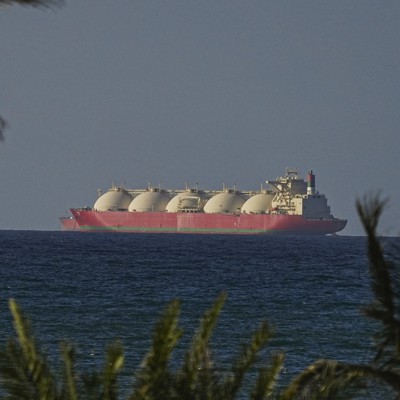
One of the biggest geopolitical consequences of the recent U.S.-Israeli airstrikes on Iran is the closure of the Strait of Hormuz. Though the exact status of the waterway remains unclear at the time of writing, the daily flow of oil and gas through it has been severely reduced. Even though the United States imports relatively little energy from the Persian Gulf, it is not insulated from global price shocks that follow any disruption in transit—as many Americans are feeling at the pump right now.
It is clear that President Trump did not anticipate Iran’s willingness to close the strait. His subsequent effort to pressure European allies into deploying a maritime force to the region appeared rushed and uncoordinated. With no prior consultation or planning, and with many European navies tied up in existing commitments or maintenance cycles, expecting an immediate deployment of high-value assets to one of the world’s most dangerous waterways was unrealistic.
Still, Trump is right about one thing: it is in everyone’s interest for shipping to move freely through the Strait of Hormuz. European frustration over how the United States entered into conflict with Iran does not change the strategic reality that this maritime chokepoint must remain open for the global economy to function. With a ceasefire in place, and with progress being made at the diplomatic level on fully reopening the waterway, there is now an opportunity to organize a coalition to ensure that Iran can never close the strait again.
First, the United States must lead diplomatically. Rebuilding trust with European allies will be essential through early consultation, shared planning, and giving partners a stake in the mission. This is also how to repair broader transatlantic relations and reestablish confidence in U.S. leadership. It also means shelving any notion of acquiring Greenland. While someone in Washington may not see how the issue connects to Gulf security, Europeans do. The consequences of Washington’s rhetoric have made it harder to build public support for deployments.
Second, any new effort should operate within existing frameworks. For more than two decades, the United States has led multinational Combined Maritime Forces based in Bahrain, including individual Combined Task Forces focused on maritime security in the Gulf and the Horn of Africa, among other places. These structures are well established and familiar to participating navies—both from the Gulf states and Asian partners. Leveraging them would allow for a faster and more coherent response.
Third, there needs to be a focus on the “three U’s”: the United States, the United Kingdom, and Ukraine. Any credible maritime operation in the Strait of Hormuz will depend on this core group. The United Kingdom brings deep experience in the Gulf and highly specialized mine countermeasure capabilities essential for clearing the strait.
Ukraine, meanwhile, brings recent, hard-earned experience. Its operations in the Black Sea have made it one of the most practiced actors in mine countermeasures in the world. Ukraine has also pioneered the use of unmanned systems in naval warfare. Kyiv has also shown the political will to contribute any operation in the Strait of Hormuz. Of note, Ukraine currently has two British-built Sandown-class minehunters, with trained crews based in the United Kingdom (where they remain, as they cannot enter to the Black Sea), which could be deployed with U.S. and British support.
Finally, broader coalition contributions will require creative thinking. The Baltic states—Lithuania, Latvia, and Estonia—possess advanced mine countermeasure capabilities and have consistently supported U.S.-led operations. Even countries without naval platforms could contribute by deploying explosive ordnance disposal specialists aboard allied vessels, allowing them to play a direct role in mine clearance.
NATO itself maintains a standing maritime mine countermeasure group that could be considered. While the Gulf lies outside NATO’s traditional area, such a mission could be structured through frameworks like the Istanbul Cooperation Initiative, which is the alliance’s main platform for cooperating with Gulf states.
With political will, flexibility, and clear American leadership, a coalition can be assembled to reopen and secure the Strait of Hormuz. The current ceasefire provides a narrow but critical window. Given the stakes for global energy markets and international trade, there is no better time to act.
