

The journey began in 1974 with the “Smiling Buddha” underground nuclear test at Pokhran, which was described by then‑Prime Minister Indira Gandhi as a “peaceful nuclear explosion.”
Despite the controversy surrounding the use of nuclear materials originally intended for civilian purposes, the test marked India’s entry into the nuclear weapons club. Over five decades later, India has consolidated its position with a complete nuclear triad encompassing land, air, and sea delivery systems, underpinned by a doctrine of No First Use and credible minimum deterrence.
The guiding principle remains retaliation rather than first strike, ensuring that India’s arsenal is designed to prevent coercion and guarantee a devastating response if attacked.
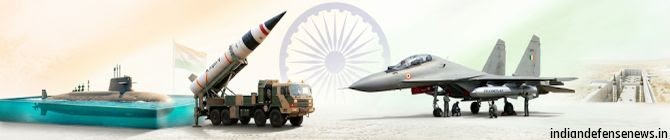
The land‑based leg of the triad is anchored by the Agni missile family, which provides a graduated range capability. The Agni‑I covers 700 kilometres, while the Agni‑IV extends to 4,000 kilometres. The Agni‑V, with a 5,000‑kilometre reach, qualifies as a true intercontinental ballistic missile capable of striking targets as far as Beijing.
Complementing these are the shorter‑range Prithvi‑II missiles, which serve tactical roles and add depth to India’s layered missile architecture. This land leg ensures readiness and rapid response, forming the backbone of India’s deterrence posture.
Looking ahead, the Agni‑VI is under development, with a projected range of 10,000 to 12,000 kilometres and equipped with Multiple Independently Targetable Re‑entry Vehicle (MIRV) technology, enabling a single missile to deliver multiple warheads to separate targets.
The sea‑based leg is the most survivable component of India’s nuclear deterrent. It currently comprises three nuclear‑powered ballistic missile submarines (SSBNs): INS Arihant, INS Arighaat, and INS Aridhaman.
These vessels are armed with submarine‑launched ballistic missiles, notably the K‑15 with a 750‑kilometre range and the K‑4 with a 3,500‑kilometre range. At least one submarine is kept on patrol at all times, ensuring continuous at‑sea deterrence and a secure second‑strike capability.
The INS Aridhaman represents a significant leap forward, with an expanded hull and eight launch tubes, allowing for a more versatile missile loadout. Future SSBNs are expected to be larger and capable of carrying more advanced systems, including the forthcoming K‑5 missile with intercontinental range and MIRV capability, thereby extending India’s deterrence reach to a global scale.
The air‑based leg provides flexibility and escalation control. India employs a range of aircraft including the Mirage 2000H, SEPECAT Jaguar, Su‑30MKI, and Dassault Rafale, all capable of delivering nuclear gravity bombs or cruise missiles.
Unlike ballistic missiles, aircraft can be recalled mid‑mission, offering decision‑makers the option to de‑escalate even after a launch order has been given. This flexibility is balanced against the inherent vulnerability of aircraft compared to submarines, but their inclusion broadens India’s nuclear options and strengthens deterrence through diversity of platforms.
India’s nuclear doctrine remains restrained, adhering to No First Use and credible minimum deterrence. Retaliation is designed to be massive, inflicting unacceptable damage on any adversary. Importantly, India has not sought parity with larger nuclear powers, choosing instead to maintain a force sufficient to deter China and Pakistan.
This restraint reflects a deliberate strategy to avoid unnecessary escalation while ensuring national security. However, modernisation efforts are accelerating, driven by the need to keep pace with technological advancements and regional dynamics.
Hypersonic systems, including glide vehicles and cruise missiles, are under development, promising enhanced penetration capabilities against missile defences. The integration of MIRVs and hypersonics positions India alongside the United States, Russia, and China in the race for cutting‑edge nuclear technologies.
Strategically, India’s nuclear posture ensures that both China and Pakistan remain deterred. The Agni‑V and forthcoming Agni‑VI keep China within reach, while shorter‑range systems maintain stability with Pakistan.
The proximity of India and Pakistan, separated by mere seconds in missile flight times, heightens the risk of miscalculation and underscores the importance of India’s assured retaliatory capability. Continuous modernisation of the triad strengthens deterrence but also introduces new escalation dynamics in one of the world’s most volatile regions.
India’s nuclear arsenal, once modest, is now maturing into a powerhouse that not only secures regional stability but also projects influence on a global scale.
India’s trajectory reflects a balance between restraint and ambition. By maintaining a doctrine of No First Use while investing in advanced delivery systems, India signals both responsibility and resolve.
The evolution from Smiling Buddha to a fully mature triad with global reach illustrates how India has transformed its nuclear capability from a regional deterrent into a cornerstone of its strategic posture. As technologies such as MIRVs and hypersonics are integrated, India’s deterrent will remain credible and effective, ensuring that its voice carries weight in global nuclear discourse.
National Interest
