

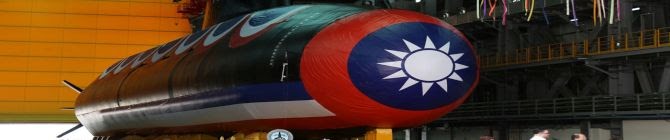
Taiwan has formally acknowledged India’s role in supporting its ambitious Hai Kun-class Indigenous Defence Submarine program. This marks a significant moment in regional defence cooperation, as New Delhi’s technical and industrial contributions have been publicly recognised by Taipei.
The Hai Kun-class represents Taiwan’s first attempt at building a domestically designed and manufactured submarine, a project that has drawn considerable international attention due to its strategic implications in the Indo-Pacific.
However, as subtlety is paramount when dealing with the sensitivities surrounding China’s Taiwan obsession, India’s involvement has been multifaceted, extending beyond the supply of specialised components to include structural elements and subsystem manufacturing. These contributions have been critical in enabling Taiwan to overcome industrial bottlenecks and ensure the integrity of its submarine construction process.
By providing advanced components tailored to the demanding requirements of undersea platforms, India has demonstrated both its growing industrial capacity and its willingness to support partners facing complex security challenges.
In addition to material support, India has offered advisory expertise through retired naval personnel with extensive experience in operating Kalvari-class and Kilo-class submarines. Their guidance has been instrumental in helping Taiwan’s engineers and naval planners adapt proven operational practices to the new indigenous design.
This transfer of knowledge has strengthened Taiwan’s ability to integrate advanced systems and refine its submarine doctrine, ensuring that the Hai Kun-class will be both technically sound and operationally effective.
The acknowledgement by Taiwan underscores the importance of India’s emerging role as a defence technology partner in Asia. It highlights New Delhi’s capacity not only to produce and export critical components but also to provide strategic advisory support rooted in decades of operational experience.
This collaboration reflects a broader trend of India positioning itself as a reliable contributor to regional security and self-reliance in defence manufacturing.
The Hai Kun-class program is a cornerstone of Taiwan’s efforts to modernise its navy and enhance deterrence in the face of growing maritime challenges. India’s support has added credibility to the project, reinforcing the notion that indigenous defence initiatives can succeed with carefully cultivated partnerships.
For New Delhi, the cooperation also signals its expanding influence in the Indo-Pacific, where defence collaboration is increasingly seen as a counterbalance to regional power asymmetries.
By formally recognising India’s contributions, Taiwan has not only strengthened bilateral ties but also sent a message about the value of industrial and technical cooperation among like-minded partners. This development illustrates how shared expertise and mutual support can accelerate indigenous defence programmes, while simultaneously advancing strategic interests in a contested maritime environment.
Agencies
