

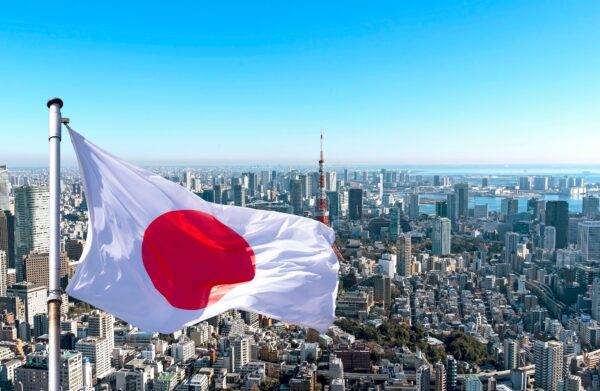
On May 27, the upper house of the Japanese National Diet approved a law to establish a National Intelligence Council (NIC) and a National Intelligence Bureau (NIB) following the law’s approval in the lower house on April 23. This push, led by Prime Minister Takaichi Sanae, comes as Japan is faced with what it perceives to be an increasingly complex international environment with modern threats that Japan’s current intelligence and defense apparatus is improperly equipped to handle.
That said, the new law is nothing radical or unheard of in the Japanese intelligence community. This law is one of a long series of reforms and restructuring dating back to the end of World War II, where Japan has persistently struggled to develop capable intelligence services while balancing against bureaucratic siloing and public fears of militarism. The establishment of the NIC and an NIB is a step in the right direction, and a natural outcome of the improvements within Japan’s intelligence community thus far. However, for this law to bring meaningful and lasting change, Japan will have to do more than restructuring, and invest in intelligence capabilities where it has traditionally been weak.
The creation of the NIC and the NIB is the first in a three-stage set of reforms to Japan’s intelligence community. The NIC is envisioned to serve as an intelligence command center, chaired by the prime minister and composed of cabinet officials. The NIB would serve as its secretariat, staffed by public servants who handle day-to-day operations. The NIB would be vested with overarching coordination authority to unify the efforts of Japan’s disparate intelligence organizations and break down the bureaucratic silos and turf wars that characterize the intelligence community’s operations.
These developments mirror the establishment of Japan’s National Security Council and National Security Secretariat in 2013, which made great strides toward enhancing cooperation between Japan’s intelligence agencies and dissemination of intelligence products to the Cabinet and the prime minister. It is worth noting that the NSC and NSS are primarily policy coordination units, and their intelligence coordination efforts are merely a stopgap measure until the Japanese government could successfully separate policy and intelligence functions. The establishment of the NIB and NIC promises to enable such a separation, and lay the foundation for Japan to create a central intelligence agency.
Nevertheless, the NIB and NIC will not be quick, definitive solutions to Japan’s bureaucratic struggles. The Ministry of Defense (MOD), Ministry of Foreign Affairs (MOFA), and National Police Agency (NPA) have all persistently struggled with issues of sharing intelligence and fighting over jurisdiction and prestige of their respective intelligence agencies.
In fact, the NIB’s predecessor, the Cabinet Intelligence and Research Office (CIRO), was only created after a compromise ensured that the director of the office would always be selected from a member of the National Police Agency. CIRO’s domination by the NPA had become problematic as CIRO, and by extension the NPA, had operational control over the MOD’s signals intelligence units, while MOFA had operational control over the MOD’s human intelligence collection, generating resentment from military and defense officials. The NSS, while it aided in interagency cooperation, featured many MOFA officials in management positions, who also share a legacy of mistrust and competition with CIRO and the NPA. As a result of these lessons, both the ruling and opposition parties in the National Diet stressed the importance of not reserving leadership in the new NIB for any particular agency.
Another major obstacle to implementing these new set of intelligence reforms is the persistent public fear of democratic backsliding and an innate distrust of militarism. Following the end of World War II, Japanese policymakers found that attempts to enhance military and intelligence capabilities were politically costly, as the Japanese public viewed such efforts as a slippery slope back to authoritarianism and militarism. This fear has evolved into a strong prioritization of democratic governance and norms.
Reforms to Japan’s intelligence community have generally come shortly after intelligence failures, as international events and a changing world highlight Japan’s military and intelligence inadequacies in self-defense. The recent growing tensions between China and Japan have presented such an opportunity for reform, but the Japanese public remains concerned.
The second stage of Japan’s comprehensive intelligence reform involves the passage of an anti-spy law, sparking concerns that the Japanese government would infringe upon its citizens’ civil liberties in the process of conducting counterintelligence operations. Opponents of the current intelligence reforms assert that insufficient guardrails are in place to ensure transparency and maintain oversight over intelligence agencies, something that Japan has often struggled with.
The third and final stage of Japan’s intelligence reform touches upon yet another persistent issue, which is in intelligence collection and analysis. Specifically, the MOFA plans to enhance its collection capabilities. While Japan is noted to be proficient at signal, imagery, and open-source intelligence collection and exploitation, its HUMINT, counterintelligence, and covert action capabilities left much to be desired. Once again, these deficiencies are a natural consequence of the Japanese public’s antimilitarist sentiment.
Japan’s HUMINT and covert operations have been characterized as passive and underdeveloped; meanwhile its inability to effectively practice counterintelligence has conferred upon Japan the reputation of being a “spy paradise.” Such a propensity for intelligence leaks creates friction between Japan and its allies, as intelligence sharing is restricted by fears of improper investigation of clearances and an inability to protect state secrets. While details remain scarce, the Japanese government has expressed plans to revamp legal frameworks and institutions to give backing to enhanced HUMINT and counterintelligence actions at the very least, while the future of covert actions is still being deliberated.
The establishment of the NIB and NIC are not radical departures from the status quo, but rather another step in a natural progression of Japan’s intelligence community that spans decades. The timing of this step however, is most certainly tied to geopolitical exigencies, primarily the great power competition between the United States and China. The institution of major reforms to Japan’s military and intelligence community have caused China a significant degree of consternation. Meanwhile, Washington has spent many years encouraging Japan to enhance its capabilities to improve prospects for intelligence sharing and mutual defense cooperation. Additionally, with the America First policies of the Trump administration, Japan may find itself incentivized to strengthen its intelligence apparatus in order to enjoy the benefits of the alliance with the United States.
At the same time, such policies may result in Japan choosing to develop an “autonomous defense” capability. The risk of U.S. abandonment or an agreement where Beijing and Washington agree to jointly manage Asia forces Japan to weigh the costs of such a comprehensive shift in defense policy against the threats present in Japan’s geopolitical environment.
For the moment, with the intelligence reforms, it appears that Takaichi has opted to reject bandwagoning with China, and is hedging her bets on a scenario where Japan continues to grow with the United States or where Japan stands alone.
