The federal government’s Pakistan defence budget for FY2026-27 has landed at roughly PKR 3 trillion — about $10.76 billion — a near 18% increase (17.65%) over last year and the largest allocation Pakistan has ever set in real dollar terms.
Yet the headline number hides the real story. The rupee’s slide has quietly eaten into those dollar gains, and the “physical assets” line jumped 39% — the kind of signal that usually points to a big procurement year ahead.
So is this the long-awaited evidence of a J-35 stealth fighter purchase that everyone keeps asking about?
In the latest episode of Defence Uncut — the first dedicated English-language Pakistani defence news and commentary podcast — hosts Bilal Khan and Arslan Khan argue the answer is almost certainly no, and walk through where the money is actually going, why the first Hangor-class submarine matters more than its hull number suggests, how Pakistan Army Aviation became the country’s most neglected force, and what the collapse of Europe’s FCAS programme could mean for India.
Finish the story. Get the full picture.
Unlock independent journalism and deeper analysis on Pakistan’s key defence and policy developments
The episode is available now on YouTube and all major podcast platforms.
The Budget: A Record in Dollars, a Warning in Rupees
The episode opens on the budget itself. At nearly PKR 3 trillion, the FY2026-27 allocation is a record in dollar terms, but Bilal stresses that the rupee’s weakness has largely eroded that real-dollar gain. The functional breakdown reported around the budget is telling: roughly PKR 967 billion for personnel, PKR 743 billion for operations, and PKR 925 billion for “physical assets” — that last category up a sharp 39%. The tri-service split, per ARY News, runs to around PKR 1.28 trillion for the Army, PKR 573 billion for the Pakistan Air Force, and PKR 293 billion for the Pakistan Navy.
Here is where Bilal and Arslan push back on the popular reading. A 39% jump in physical assets looks like a platform splurge, but the hosts argue that the bulk of the increase — they estimate 60-70% — is heading into indigenous munitions and the Pakistan Rocket Force, not big-ticket imports. Arslan points to the relentless cadence of missile tests this year and the rapid iteration of the Fatah series — new intakes, new warheads, new guidance stacks — as evidence that production scale, not a single shiny platform, is the priority.
The reason is economic as much as strategic. As Bilal explains, a platform like the JF-17 may be assembled in Pakistan, but its engine, alloys, and avionics are imported — so rupee spending hits a hard-dollar ceiling. Munitions like the Fatah series are largely indigenized, which means a rupee-denominated budget increase stretches much further.
The hosts’ bottom line: more platforms are coming (the PAF has openly flagged additional J-10s and JF-17s), but this budget is first and foremost about building a deeper munitions stockpile. It’s a theme that picks up directly from the previous episode on why Pakistan’s real problem isn’t money — it’s that it stopped bargaining.
PNS Hangor Arrives: The Submarine Is Only Half the Story
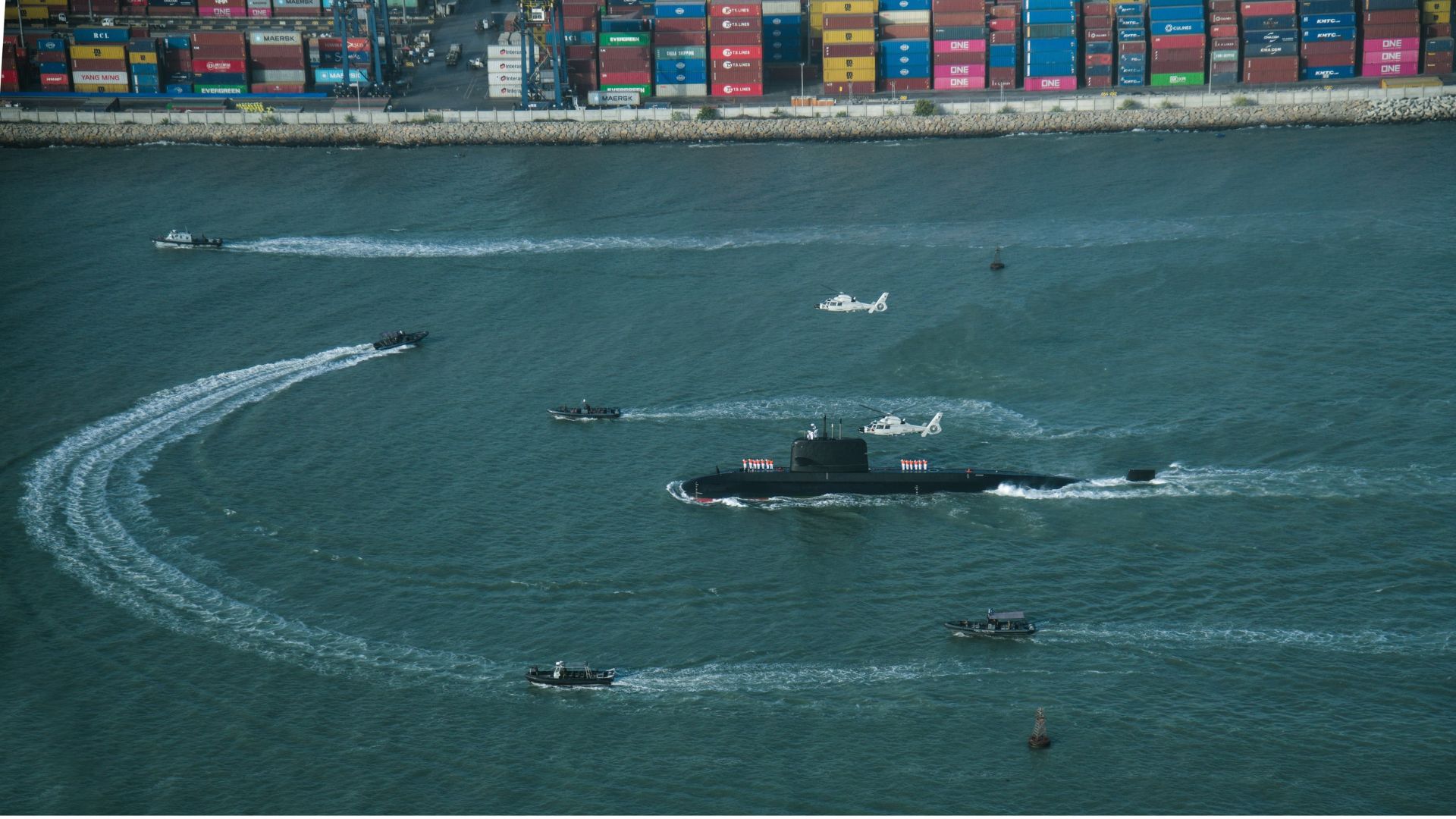
The first of eight Hangor-class submarines (Type 039B), PNS Hangor, arrived in Karachi on 11 June 2026 after being commissioned in Sanya, China, on 30 April. Bilal frames it as the start of a delivery run that should see all eight boats — half built in China, half at Karachi Shipyard — in service by the early 2030s, giving the Pakistan Navy a fleet of eleven AIP-equipped submarines and a dramatically denser electronic-intelligence net across the Arabian Sea.
But the more interesting discussion is about what comes after the Hangor. Arslan walks through the limits of the ageing Mesma AIP submarine system on the Agosta 90B (Khalid) class — maintenance-heavy and, in relative terms, louder than a modern Stirling system — and the visible degradation of the older Agosta 70 (Hashmat) boats.
That sets up the Navy’s next moves: the closely guarded Shallow Water Attack Submarine (SWATS) programme, a future original submarine project to replace the Agostas, and a growing interest in unmanned underwater vehicles.
The hosts are blunt that a submarine purchase is never just a submarine purchase. A single DM2A4 heavyweight torpedo runs about $3.5 million, and a full combat load across a fleet of eleven-plus boats quickly climbs into the hundreds of millions.
The Hangors are believed to ship with YJ-18 anti-ship missiles as a stopgap — Arslan offers a memorable breakdown of why that “missile-pretending-to-be-a-plane” design is capable but far from ideal — which is exactly why he reads the programme as a long-term bet on indigenous torpedoes, supersonic missiles and UUVs. Bilal goes further, floating the idea that Pakistan’s private sector could turn the Navy’s UUV work into autonomous, very-long-range torpedoes — effectively casting the Pakistan Navy as the “Skunk Works” of the country’s military.
Army Aviation: Pakistan’s Most Neglected Force?
A recent Pakistan Army Mi-17 loss — attributed by ISPR to a technical fault on takeoff — becomes the jumping-off point for the episode’s sharpest argument: that General Headquarters has never quite figured out what to do with Army Aviation.
Bilal traces the pattern across decades — the force has only ever grown on the back of counterinsurgency waves and foreign aid, from Iran-loaned Cobras in 1970s Balochistan to the US-supplied build-up of the 1980s to the Bell 412s, surplus Cobras and Mi-17s of the war-on-terror years — and then stagnated each time the impetus faded.
The T129 ATAK saga is the case study. Pakistan ordered 30 of the Turkish attack helicopters in 2018 on what Bilal calls a no-risk deal: Türkiye financed the loan, fronted the build cost, and even planned a regional MRO and training hub inside Pakistan.
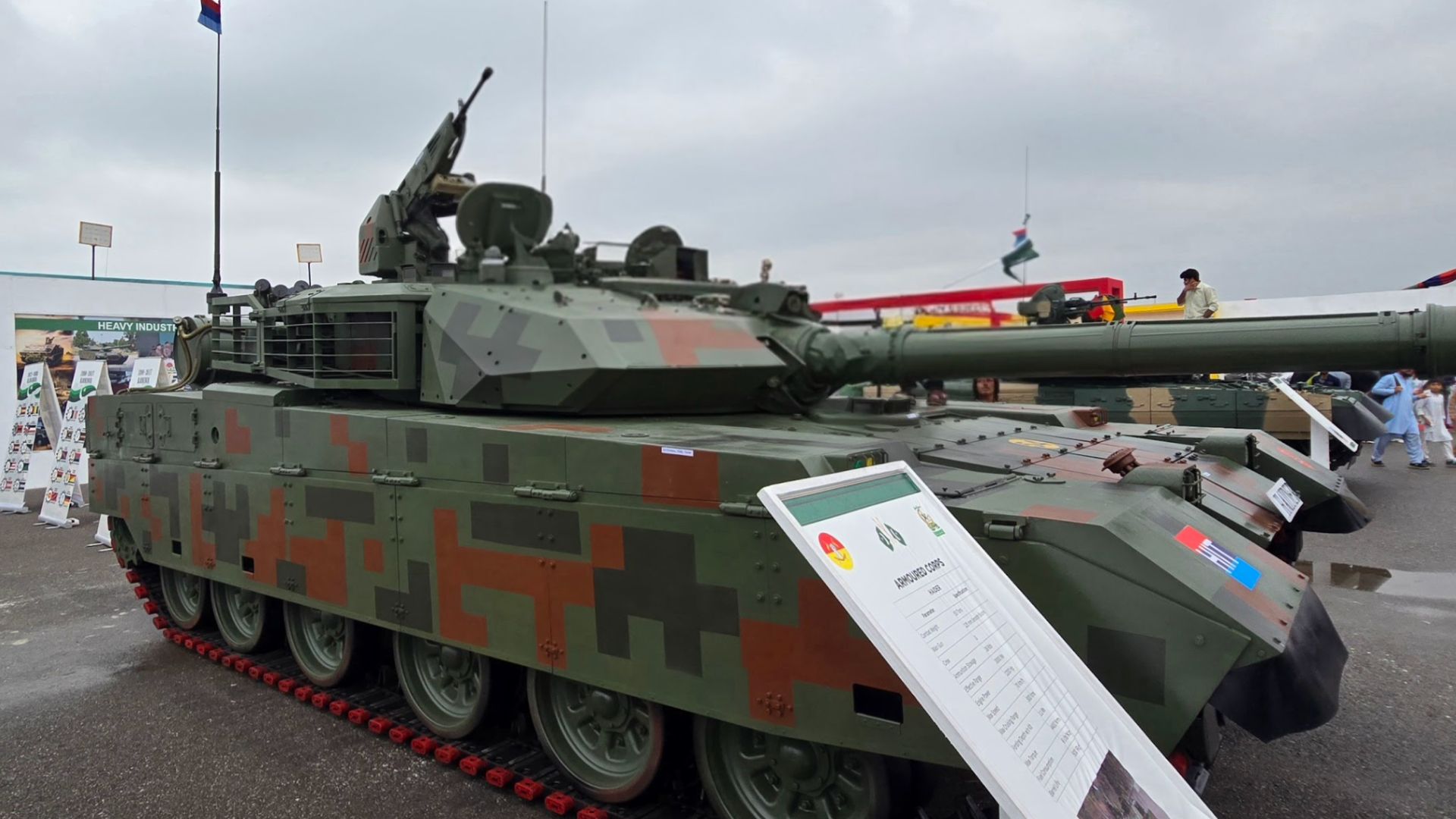
When Washington blocked the engine export, Pakistan owed nothing — but it also lost a deal that could have left it servicing the T129 ATAK fleets now operated by the Philippines and Nigeria — with Bangladesh next in line. Meanwhile, national funding flowed to the VT-4 tank, the Haider programme and the SH-15 howitzer, and the lone Z-10ME remains under evaluation.
Bilal’s prescription is the part worth tuning in for: stop treating Army Aviation as a niche close-air-support arm and start treating it as an instrument of air power — and, above all, consolidate. Instead of juggling Pumas, Bell 412s, UH-1s, Mi-17s and Mi-171s with overlapping roles and parallel support chains, he argues for merging them into a single 9-10 tonne utility platform (think Black Hawk, AW149 or Z-20 class) to generate a 100-150 unit requirement — and, if the Navy and Air Force are folded in, 150-200 units.
That kind of number, he explains, is what finally buys real negotiating leverage: targeted offsets, joint local production and re-export into the global supply chain, rather than another round of buying “a little of this, a little of that.”
Inside Pakistan’s Electronic Warfare Playbook
The first audience question — submitted by a listener — asks Bilal to unpack Pakistan’s electronic warfare capabilities. His framing is clean: in peacetime, each of the tri-services builds an electronic-intelligence picture using land-, sea- and air-based sensors, recording enemy radar and communications emissions into a shared “threat library.”
In wartime, that library feeds the active jammers and electronic-attack systems that rebroadcast those frequencies back at the adversary.
Bilal walks through how shared domestic vendors like NESCOM and the NRTC sit at the centre of that data flow (with NASTP a possible Air Force silo to work around), how the May 2025 clashes likely generated a trove of recorded emissions now being parsed, and how AI and machine learning are increasingly used to extrapolate what an unregistered emitter might look like.
It’s a deliberately crude, accessible explainer of a notoriously opaque subject — and a reminder, as Bilal notes, that India is running the exact same playbook in the other direction. He flags a dedicated EW episode to come.
How the Pakistan Navy Closes the Kill Chain Against India
A second listener question — how the Pakistan Navy can build a credible coastal missile force against the Indian Navy — draws out one of the episode’s most forward-looking segments.
The munitions answer is almost embedded in the question: more supersonic cruise missiles (the CM-302, an anti-ship Fatah-3 derivative, the HD-1), longer-range anti-ship ballistic missiles, and eventually hypersonics — though Bilal is candid that scramjet-class hypersonic cruise missiles aren’t on the cards yet.
The harder problem, he argues, is the kill chain. Long-range missiles are useless without over-the-horizon targeting, and Bilal lays out the Navy’s options: a dedicated OTH radar (a tempting but conspicuous target), Israeli-style early-warning radars, or — most likely — a distributed, networked web of sensors stitched together from Sea Sultan and Sea Eagle maritime patrol aircraft, Shahpar-3 drones, unmanned surface vessels, and the emerging PRSC-EO3 and PRSC-S1 satellite constellation (with PISAT to come). The throughline: against a larger Indian Navy, survivability favours disaggregation over a single big radar that simply paints a target on itself.
The FCAS Collapse and the India Question
The episode closes on Europe. The Franco-German Future Combat Air System (FCAS) — Europe’s flagship sixth-generation fighter — collapsed in early June 2026, with Paris and Berlin unable to bridge a leadership and workshare dispute between Dassault and Airbus. That, Bilal notes, reopens a possibility he had theorized twice before: that France, now in need of a funding and R&D partner, could approach India to co-develop a sixth-gen platform.
His analysis of why that could work is the payoff for the segment. Bilal sketches India’s defence-industrial landscape as three competing camps — an operationally rigid Indian Air Force (much like the PAF), a state-owned HAL-and-Russia establishment built on familiar workshare, and a private-sector “nation-builder” bloc behind programmes like AMCA and Tejas.
A net-new FCAS, with no existing workshare to defend, lets the French speak to all three at once — something the stalled Rafale negotiations, hostage to French domestic labour politics, never could. Whether New Delhi bites is another matter — but the logic, Bilal argues, is more plausible than it looks from the outside.
Defence Uncut is available now on YouTube and all major podcast platforms, including Spotify and Apple Podcasts.
Quwa Plus
Make Sense of Pakistan’s Defence and Policy Shifts
Independent Pakistan-led analysis, Pulse Check audio briefings, and a decade of reporting to help you understand what changed, why it matters, and how the story fits together.
Featured & Trusted By