

Mutual interests often bring culturally distinct states together, and the China-Pakistan friendship is a major testament to that, as it is heavily defined by a common strategic objective to manage India’s influence in South Asia. This relationship, often described as one between “iron brothers,” has largely revolved around military and economic cooperation, notably through defense deals and the China-Pakistan Economic Corridor (CPEC).
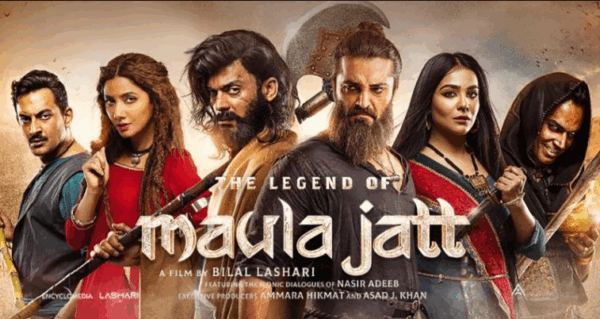
Yet, for all its celebrated depth, the relationship has scarcely developed a cultural life of its own. Therefore, the release of the Pakistani film “The Legend of Maula Jatt” on May 21 in China is a major step in cultural exchange. This development was announced by the film’s director, Bilal Lashari, on his X handle with a Mandarin-dubbed trailer. It marks a rare breakthrough for Pakistani cinema as the film secured a place in China’s tightly restricted foreign-film quota market, which is a significant leap forward in a relationship where cultural exchange has long lagged behind political relations.
The choice of this movie makes perfect sense. “The Legend of Maula Jatt” is the biggest film ever made by Pakistan, in terms of both budget and box-office revenue. It took nearly a decade to finally hit the screen, which was an extraordinary gamble for a big-budget film in a nascent industry like Lollywood. But “The Legend of Maula Jatt” stormed the box office when it was finally released in 2022, and it grossed around $14 million globally, something which was previously considered out of reach for any Pakistani movie.
Most importantly, it brought back the gandasa genre, which focuses on a rural protagonist’s bloody quest for revenge. The obsession with gandasa was deemed to be the reason for the Pakistani cinema’s repetitive rut and eventual downfall. But the origins of gandasa were never as blood-soaked as the genre later turned out to be. The Maula Jatt tradition derives from Ahmed Nadeem Qasmi’s short story “Gandasa,” which is less a celebration of vengeance and more a warning about the cost of justice and retribution. Turning the moral unease into spectacle, Lashari revived the mythology as Pakistan’s most polished modern magnum opus.
The upcoming China release of “The Legend of Maula Jatt” also has a tinge of missed opportunity. The film’s release in India never materialized due to continuous cancellations because of strained India-Pakistan bilateral relations and right-wing political opposition in India. Still, its long absence from streaming platforms after its 2022 release also preserved its theatrical value abroad, whether by design or by accident.
It is worth noting that there was some previous cultural traffic between Chinese and Pakistani filmmakers. Kent S. Leung, a Chinese actor, appeared in a Pakistani flick, “Chalay Thay Saath,” while a Pakistani aviation film, “Parwaaz Hai Junoon,” was released in China as a gesture of friendship in 2020. “Ba’Tie Girl” was the first major China-Pakistan co-production. But none of those efforts created a lasting momentum.
The limited success of cultural diplomacy is often attributed to language barriers, cultural distance, poor promotion, and no sustained exchange. That is why “The Legend of Maula Jatt” is more significant, because it is not merely a friendship project dressed as a film. It is a homegrown Pakistani hit, embraced first by its own audience and now being tested before Chinese moviegoers on commercial terms.
The timing provides additional weight to the release. China has established a reputation of being a cinematic superpower due to the scale of its domestic market, as the Chinese film “Ne Zha 2” became the world’s highest-grossing animated movie of all time. At the same time, Beijing’s growing scrutiny of Hollywood is potentially opening doors to non-Hollywood cinema. Indian movies have already explored that space and achieved immense success by releasing films like “Dangal” and “Hindi Medium.”
Interestingly, most of the Indian movies that resonated with the people of China were stories that conveyed emotions of family, aspirations, and social pressure. This puts a question mark over the assured box-office success of “The Legend of Maula Jatt” on Chinese screens, as it is a revenge-based epic that is entering a land already saturated with its own action films. Its strength rests a lot on the use of Punjabi dialogue, verbal sparring, and passed-down folktales. Dubbing can mirror the plot; it cannot necessarily translate the swagger of a line, the social texture behind a taunt, or the inherited mythology that gives the characters their force at home.
The late announcement does not help either. Releasing a foreign film on such short notice, with little time for promotion, is hardly ideal in a market where it has no built-in audience.
Even a modest run would matter as the first step, but the real question remains what follows this development. Pakistan does not currently have a line of films waiting that can match the finesse, scale, or novelty of “The Legend of Maula Jatt.” Therefore, a major shift in Chinese appetites for Pakistani cinema will remain wishful thinking unless this release marks the beginning of a durable pipeline of films.
“The Glassworker” offers one possible next step. Pakistan’s first hand-drawn Ghibli-style animated feature won significant international acclaim because of its anti-war messaging. The Chinese love for animation, heightened by the impact of “Ne Zha 2,” makes “The Glassworker” a more plausible future candidate to win a spot amid China’s exclusive foreign-quota releases, rather than waiting years for another big-budget extravaganza.
Lastly, if this cultural exchange bears some fruit, the prospect of co-productions can become a sustained reality. That could be beneficial for both the China-Pakistan Media Corridor and Pakistan’s cinema industry, struggling with a meager market. Since the emergence of the high-octane “Wolf Warrior” films in China, the country has also been increasingly interested in the action and war genre, and Pakistan may be a natural fit as an on-screen ally and for future film settings.
As of now, “The Legend of Maula Jatt” has done enough to be relevant: it has introduced a distinctly Pakistani legend into a nation that is more than familiar with Pakistan as a political partner than as a culture. Whether this remains a proud one-off or begins turning an all-weather friendship into a cinematic partnership with real people-to-people contact remains to be seen.
