

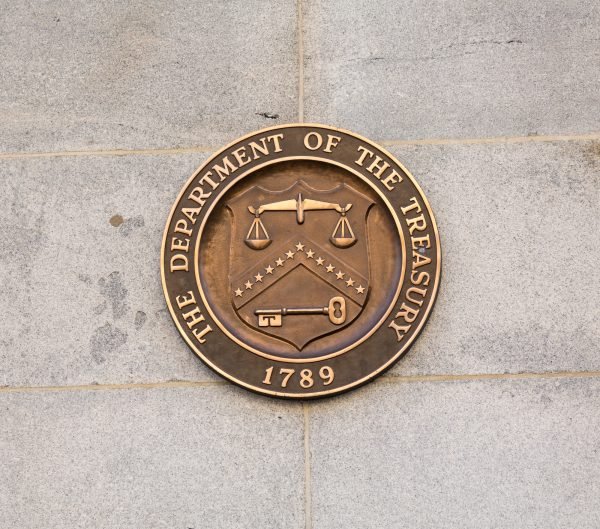
The U.S. government has lifted sanctions on the daughter of a Myanmar businessman accused of supporting the country’s military, after she filed two lawsuits seeking her removal from the Treasury Department’s Specially Designated Nationals List (SDN List).
According to a Reuters report, Theint Win Htet’s name was removed from the website of the Department’s Office of Foreign Assets Control (OFAC) on Friday. OFAC confirmed the deletion of her name from the SDN List in a statement the following day.
Theint Win Htet was added to the SDN List in January 2024 alongside her father Thein Win Zaw and his Shwe Byain Phyu Group of Companies. The Treasury Department said at the time that the company “has developed a historic relationship with Burma’s military to import and distribute petroleum,” including on behalf of Myanma Economic Holdings Public Company Limited (MEHL), a sanctioned military-linked conglomerate with tentacles in numerous sectors of Myanmar’s economy.
The listing announcement also stated that Thein Win Zaw has “provided fuel to Burma’s navy while using his companies to import petroleum and share profits with MEHL” and that he and his family members “own at least 20 companies in various sectors of the Burmese economy and are also closely associated with the regime.”
The following May, Theint Win Htet filed a lawsuit seeking her removal from the SDN List, claiming that President Joe Biden exceeded his authority under the International Emergency Economic Powers Act by listing the adult children of a designated individual. She also said that it had breached due process by not permitting her to contest her inclusion on the SDN List. Her case was dismissed in February 2025.
Theint Win Htet then filed a new complaint in July of this year, arguing that she has no active role in her father’s business affairs and that the sanctions had interrupted her studies in the United States. In the complaint, Reuters reported, Thein Win Htet stated that her “U.S. credit cards have been blocked, her foreign bank accounts have been restricted, closed, or refused, and she has been unable to complete her university studies.”
Her removal from the SDN List comes after the news agency reported that the U.S. had engaged in direct talks with the military-backed government for the first time since the February 2021 coup. According to the report, U.S. Assistant Secretary of State for Intelligence and Research Michael Vance “joined talks” with coup leader-turned-president Min Aung Hlaing in Naypyidaw on September 15-16. Numerous sources told Reuters that the talks were aimed at securing the release of detained American businessman Adam Castillo, but “also provided an opening for further engagement.”
Whether the removal of Theint Win Htet’s name is related to a possible broader diplomatic thaw remains unclear. A State Department spokesperson contacted by Reuters did not offer much explanation for the move, simply saying that the decision “reflects the administration’s determination that this designation no longer effectively supports U.S. policy objectives related to Burma.”
This is also not the first time since the coup that the name of a Myanmar individual or entity has been scrubbed from the SDN List. In July 2025, the U.S. government lifted sanctions on three Myanmar companies and a number of individuals linked to them, including KT Services & Logistics and its founder, Jonathan Myo Kyaw Thaung, who were sanctioned in 2022 for leasing Yangon’s port from MEHL. Also included on the list was Thein Win Htet’s mother Tin Latt Min.
As with last week’s announcement, OFAC did not offer a reason for the deletions, although The Irrawaddy noted that the move came after Min Aung Hlaing praised President Donald Trump in a letter responding to his threat of tariffs, in which he also commended him for shutting down U.S.-funded media outlets covering the country’s conflict. Trump administration officials said that there was “no connection between these decisions and the letter.”
Getting one’s name off the SDN List is hard even at the best of times, usually requiring the enlistment of one of a handful of specialist white shoe law firms. (Theint Win Htet was represented by Erich Ferrari, a prominent Washington-based lawyer who specializes in “economic sanctions, export controls, regulatory licensing, federal investigations, and prosecutions.”)
While the addition or removal of names from the SDN List is guided in part by legal criteria, OFAC’s decisions are often influenced by the broader policymaking climate. It is therefore plausible that a turn toward engagement with Myanmar would be accompanied by a loosening of U.S. sanctions on the country.
Whether or not this is the case here, any further shortening of the SDN List would suggest that the first steps toward engagement are evolving into a more substantial rapprochement.
