

In early June, the Office of the U.S. Trade Representative released its recommendations under a Section 301 investigation of 60 economies over their alleged “failure to impose and effectively enforce a prohibition on the importation of goods produced with forced labor.” The current proposal has a central flaw: it evaluates trading partners by only one criterion, namely, whether they prohibit and enforce restrictions on trade in goods made with forced labor. It does not take into account the risk of forced labor within each country’s own production system.
As a result, USTR recommended that China receive the same 12.5 percent tariff as Japan, Australia, Norway, and Switzerland, despite fundamental differences in the scale, institutional entrenchment, and global reach of its suppression of labor standards. No credible risk-based framework would treat these countries alike.
The Section 301 proposal seeks to address trade distortions, but it remains an incomplete solution. If the goal is a fairer global trading system, policy must also address one of the underlying causes of those distortions: the long-standing repression of labor in production itself.
In my view, Section 301 tariffs cannot directly or immediately improve working conditions in the targeted economies; they are not a substitute for labor enforcement. At most, they force governments and firms to confront the true cost of their production model. These economies have little incentive to raise labor standards on their own because much of their competitive advantage rests on suppressing them. A tariff does no more than raise the cost of access to the U.S. market. But where that advantage depends on keeping labor costs artificially low, raising those costs is precisely the lever that matters.
The USTR has already recognized that countries that fail to eliminate forced labor gain a cost advantage at the expense of law-abiding firms and American workers. China is the largest beneficiary of that advantage because of the scale of its manufacturing economy. Yet the current proposal applies the same tariff rate to China as to countries with far lower systemic risk, undermining the incentive structure the tariff is meant to create.
China should face a higher tariff rate because it poses a high labor risk and occupies a dominant position in global manufacturing. The two compound each other: The same labor-cost suppression that would distort competition anywhere does far more damage when it operates at China’s scale. Under a uniform, objective, and risk-based framework, a higher tariff rate for China would follow naturally.
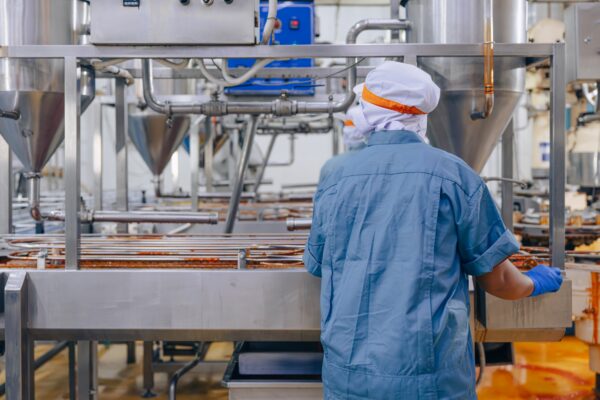
Let me cite just one example. Despite years of repeated public commitments by Apple and its supplier, Foxconn, to improve labor conditions at China-based factories, our most recent investigation in 2025 found that little had changed at Foxconn’s Zhengzhou campus, which employed more than 200,000 workers at its peak. Employees commonly worked six or seven days a week, often exceeding 70 hours, while wages were delayed or partially withheld, making it difficult for them to leave the factory.
Some argue that workers chose these conditions, but that argument ignores the institutional constraints shaping workers’ choices. In China, rural livelihoods are no longer sufficient to support many families, forcing millions to migrate for work. The hukou system further separates migrant workers from their families and leaves them without equal access to urban social protection. These structural conditions produce working conditions that correspond to several internationally recognized indicators of forced labor, including abuse of workers’ economic vulnerability, excessive overtime, the withholding of wages, and restrictions on workers’ freedom to resign.
The most common objection to the United States’ Section 301 tariffs is that they will ultimately hurt the workers they are meant to protect. Similar arguments have been made in the past as well; before China’s Labor Contract Law took effect in 2008, some business groups warned that stronger labor protections would raise costs and destroy jobs, while some economists predicted mass unemployment. International brands likewise defended chronic overtime by arguing that workers wanted the extra hours. None of these predictions ever materialized.
In China, legal protections on working hours, overtime pay, and social insurance remain widely unenforced. Many factory workers still earn little more than a subsistence wage, lack legally required social insurance, and routinely work far beyond statutory overtime limits. A labor-based Section 301 tariff is not creating these labor issues. Instead, it is shifting the existing burden of low-cost production – long borne by workers – back to the firms themselves.
The good news is that there are signs that international pressure is starting to shift corporate behavior. BYD’s overseas projects have faced labor enforcement in Brazil and Hungary. U.S. Customs continues to issue Withhold Release Orders against Chinese firms. Beginning in 2027, the European Union will apply its Forced Labor Regulation.
Under this growing pressure, Chinese government agencies and industry groups have begun issuing forced-labor compliance standards. In addition, China’s new outbound investment rules, for the first time, explicitly require Chinese companies investing overseas to protect workers’ rights and comply with local laws. These legal changes suggest that labor standards are starting to shape policy in Beijing itself – and that companies are beginning to reassess the legal and commercial risks associated with labor abuses.
Tariffs can create an opportunity to improve labor conditions, but there is no guarantee that will actually happen. Any government considering this tool must weigh its costs carefully and understand that it might fail.
However, the consequences of maintaining the status quo are already visible. By Beijing’s own count, workplace accidents killed 106,399 people from 2021 to 2025, an average of nearly 60 deaths every day. And that figure excludes occupational diseases, deaths from overwork, and unrecorded industrial fatalities. Sixty-hour workweeks remain common despite two decades of corporate pledges. Meanwhile, American jobs continue to be lost to production systems that compete by suppressing labor standards.
Labor-based tariffs have only an uncertain chance of changing the incentives, but doing nothing guarantees workers in both China and the United States will continue to bear the costs. Of the tools available to the U.S. government, a labor-based tariff schedule is the only one designed to make labor violations carry an economic cost. The purpose is not to punish countries but to make respecting labor standards more competitive than suppressing them.
To shape companies’ commercial practices over the long term, the United States’ Section 301 tariffs must be based on clear rules rather than ad hoc political decisions. Only when tariff rates are transparent, predictable, and tied to measurable indicators of a country’s economic scale and labor conditions will governments have a meaningful incentive to improve labor standards, and only then will firms begin to treat respect for labor standards as part of their long-term business strategy, rather than as simply a short-term response to tariffs.
