

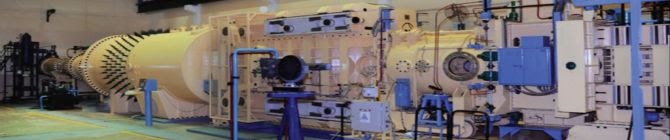
Defence Research & Development Laboratory (DRDL), Hyderabad, is preparing to establish a cutting-edge blow‑down type Trisonic Wind Tunnel (TWT) with a test section measuring 1.6 metres by 1.6 metres.
This advanced facility will be capable of operating across a Mach number range from 0.2 to 4.5, covering subsonic, transonic, and supersonic flight regimes. The project represents a major step in strengthening India’s aerospace testing infrastructure and will be developed at a designated site in Hyderabad.
The new wind tunnel will provide controlled, uniform, and steady airflow conditions essential for aerodynamic testing. It is designed to support the evaluation of scaled models of rockets, tactical missiles, aircraft, launch vehicles, and other aerospace systems.
By enabling precise aerodynamic data generation, the facility will allow engineers to study performance characteristics across different flight regimes, ensuring accuracy in design and validation.
The blow‑down type configuration of the tunnel will allow high‑pressure air to be released into the test section, simulating real flight conditions with remarkable fidelity. This type of facility is particularly suited for short‑duration but highly accurate aerodynamic experiments, which are critical for validating computational fluid dynamics models and refining designs before full‑scale trials.
India’s aerospace sector has long relied on limited wind tunnel infrastructure, with existing facilities often constrained in size or Mach range. The establishment of this trisonic tunnel will bridge a critical gap, providing indigenous capability to test advanced systems without dependence on foreign facilities. It will also complement ongoing programs in hypersonic propulsion, missile development, and next‑generation aircraft design.
Globally, trisonic wind tunnels are considered indispensable for aerospace research, as they allow testing across the most challenging regimes of flight. The Hyderabad facility will place India among a select group of nations with such advanced infrastructure, enhancing its ability to develop competitive aerospace technologies.
It will also serve as a platform for collaboration between DRDO, academic institutions, and industry partners, fostering innovation in aerodynamics and flight sciences.
The data generated from this tunnel will be vital for India’s strategic programs, including the development of long‑range missiles, reusable launch vehicles, and advanced combat aircraft. It will also support civilian aerospace initiatives, such as improved aircraft efficiency and safer designs. By enabling comprehensive aerodynamic evaluation, the facility will reduce reliance on costly flight trials and accelerate the pace of development.
The project highlights DRDL’s role as a key contributor to India’s defence and aerospace research ecosystem. With Hyderabad already emerging as a hub for advanced defence technologies, the addition of this trisonic wind tunnel will further consolidate its position as a centre of excellence in aerospace engineering.
Agencies
