

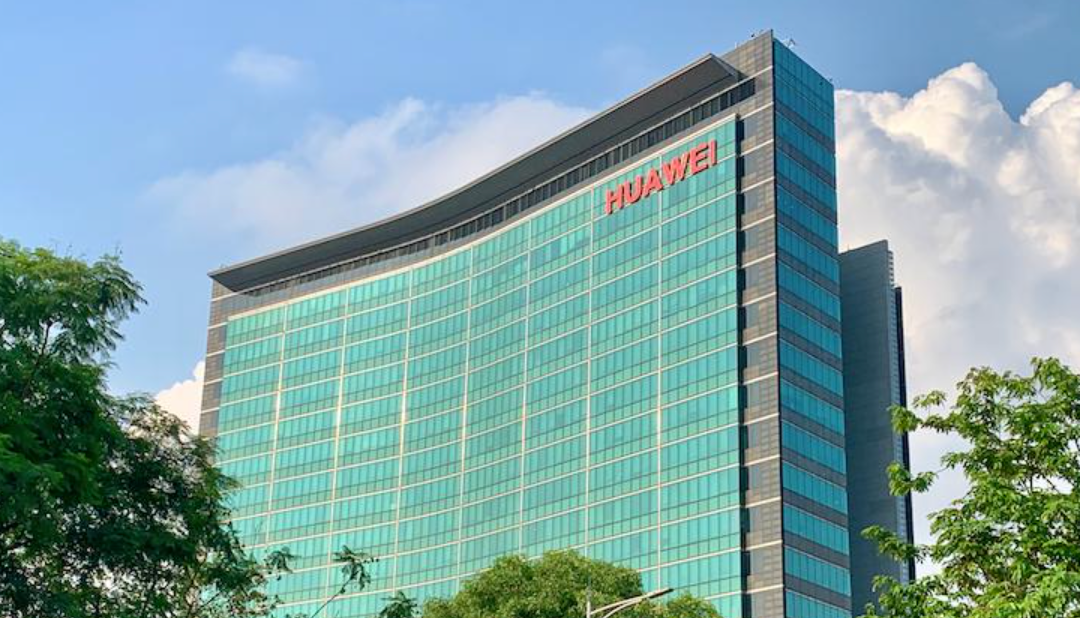
Chinese telecommunications giant Huawei has been convicted of conspiring to violate US sanctions following years of clandestine dealings with Iran.
Evidence presented during the trial revealed how Huawei supplied technology that helped Iranian intelligence services monitor internet users and enabled the regime to conduct surveillance of anti-government protests.
A federal jury in New York found Huawei guilty on 10 of 12 criminal counts, including sanctions violations, bank fraud, money laundering conspiracy and conspiracy to steal trade secrets from American companies.
However, jurors acquitted the company of the most serious charge of racketeering conspiracy, as well as conspiracy to obstruct justice.
Huawei, one of the world’s largest suppliers of telecommunications equipment, has announced plans to appeal against the convictions.
The US Department of Justice (DoJ) said Huawei had helped develop Iran’s internet infrastructure and expand access to mobile networks.
The company also worked with Zaeim, identified by US prosecutors as part of Iran’s intelligence apparatus, to monitor and censor internet access.
Testimony established that Huawei had supplied surveillance cameras that enabled Iranian authorities to monitor protest activity.
Huawei conducted business in Iran under the name Skycom, a wholly owned subsidiary that the telecommunications giant had falsely presented as an independent business partner.
According to US prosecutors, Huawei repeatedly misled banks, journalists and government officials about the company’s dealings with Iran’s government, military and intelligence services.
Huawei also falsely claimed to have begun restricting business in Iran in 2011 and to have complied with all applicable sanctions.
By concealing these activities, the company secured billions of dollars from banks and retained access to US-dollar clearing services.
US Attorney for the Eastern District of New York Joseph Nocella Jr. said Huawei’s criminal activities included “yearslong collaboration with sanctioned entities in Iran, repeated lies to banks, and blatant thefts from U.S. technology companies”.
Acting Principal Deputy Assistant Attorney General for National Security M. Scott Proctor said: “Huawei violated our laws, empowered our enemies, and harmed our national security.”
The verdict could have wider implications for Chinese companies operating in sanctioned economies, particularly those conducting business through overseas subsidiaries.
Although commercial dealings between foreign companies and Iran do not automatically constitute a violation of US law, transactions involving the American financial system or restricted US technology can expose businesses to criminal prosecution.
International banks frequently rely on US financial institutions to process dollar-denominated transactions, giving Washington considerable influence over commercial dealings outside American territory.
The case also raises questions about the scrutiny banks apply to the overseas operations of multinational technology companies when determining whether clients are complying with sanctions.
Restricting Tehran’s access to foreign technology remains a challenge for Washington given the Islamic Republic’s longstanding economic relationship with Beijing.
Chinese purchases of Iranian oil provide Tehran with an important source of revenue, while commercial ties give the country access to industrial goods and technology.
In 2021, the two countries signed a 25-year cooperation agreement covering energy, infrastructure and economic development, strengthening a partnership that has become increasingly important to Tehran as Western sanctions have restricted access to international markets.
Responding to the verdict, the Chinese Foreign Ministry condemned what Beijing regards as US efforts to suppress Chinese companies and expressed support for businesses defending their legal rights.
The Huawei prosecution has been a source of diplomatic friction since 2018, when the company’s chief financial officer, Meng Wanzhou, was arrested in Canada at the request of US authorities.

Meng, the daughter of Huawei founder Ren Zhengfei, faced charges relating to alleged misrepresentations to HSBC about the company’s dealings in Iran.
Her detention triggered a diplomatic crisis between Beijing and Ottawa. Meng returned to China in 2021 after reaching an agreement with US prosecutors, with the charges against her subsequently dismissed.
Washington placed Huawei on a trade blacklist in 2019, restricting the company’s access to American technology over national security concerns.
Britain subsequently ordered the removal of Huawei equipment from its fifth-generation (5G) mobile networks by the end of 2027, while Canada announced restrictions on the company’s telecommunications equipment in 2022.
Despite these restrictions, Huawei has expanded into semiconductor development and artificial intelligence (AI), becoming central to Beijing’s efforts to reduce dependence on American technology.
Huawei’s lawyers rejected the prosecution’s portrayal of the company as a criminal enterprise.
During the trial, the defence also argued that HSBC and other international banks were already aware of Huawei’s activities in Iran and were competing for the company’s business, Reuters reported.
Brian Heberlig, a lawyer representing Huawei, described the two acquittals as “a vindication of the company and its good-faith compliance culture”.
Speaking outside the court in New York, Heberlig said: “The allegations that the government made in this case overreached and simply weren’t consistent with the successful, innovative and hardworking company that we came to know and deeply respect.”
Huawei and three of its subsidiaries face criminal fines, forfeiture and restitution when they are sentenced in September 2027.
The financial penalties have yet to be determined but could amount to billions of dollars.
