

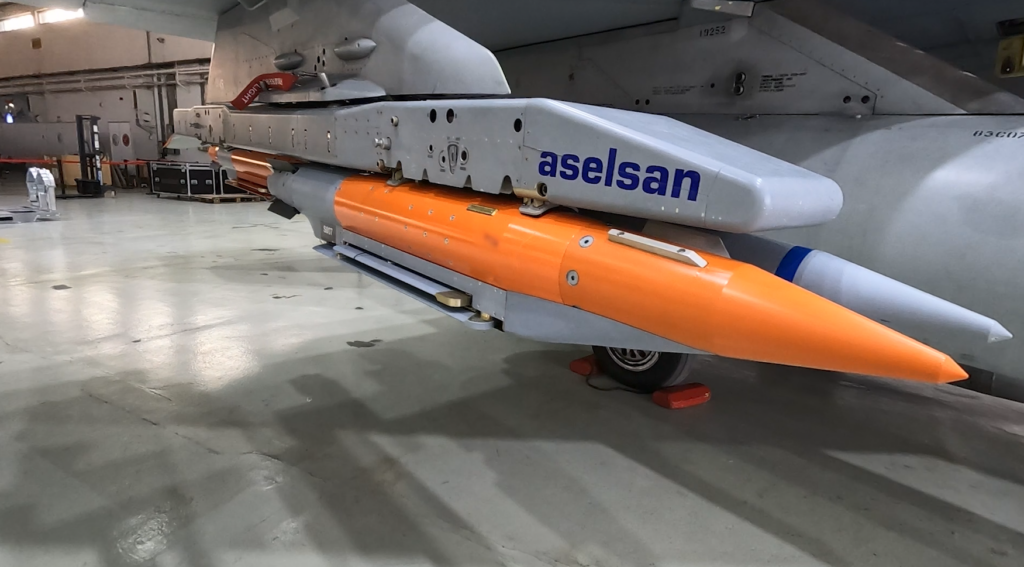
As armed forces increasingly prioritize autonomy, operational flexibility and decision superiority, the focus of uncrewed aviation is shifting beyond platforms toward the mission systems they carry. At Farnborough International Airshow, ASELSAN is demonstrating this transformation through a comprehensive portfolio of electro-optical systems, radars, electronic warfare payloads and precision-guided munitions designed for both current and next-generation UAVs.
The company’s exhibit reflects a broader industry trend: operational effectiveness is increasingly determined by the integration of sensing, electronic warfare, communications and precision engagement capabilities within a single mission ecosystem.
Radar technologies form a cornerstone of ASELSAN’s airborne portfolio. At Farnborough, the company is showcasing its FULMAR 200 and FULMAR 500 radar systems alongside the MURAD AESA radar family. These systems provide all-weather surveillance, high-resolution imaging and multi-target tracking capabilities, enabling operators to maintain situational awareness even in environments where electro-optical sensors may be constrained. The integration of MURAD on advanced Turkish uncrewed platforms demonstrates how technologies traditionally associated with fighter aircraft are increasingly being adapted for the uncrewed domain.
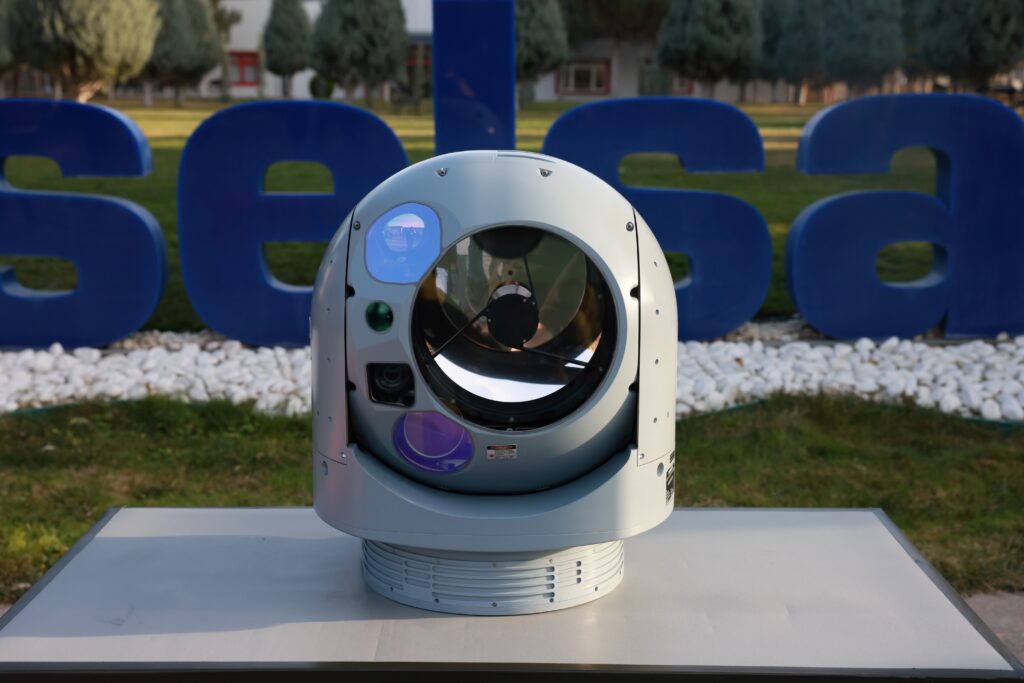
Complementing these radar capabilities are ASELSAN’s electro-optical payloads, including the ASELFLIR 410, ASELFLIR 510 and ASELFLIR 600 families, which provide advanced surveillance, reconnaissance, targeting and tracking capabilities. Designed to support a wide range of UAV classes and operational requirements, these systems enable long-range target detection and identification under demanding environmental conditions.
The company is also presenting avionics and mission systems such as TOYGUN Electro-Optical Sensor System and KARAT Infrared Search and Tracking System, which enhance navigation, situational awareness and mission effectiveness for both crewed and uncrewed platforms. Alongside these, ASELPOD, ASELSAN’s combat-proven targeting pod widely used on fighter aircraft, demonstrates the company’s extensive experience in airborne sensing technologies across multiple platform categories.
Electronic warfare capabilities are also becoming critical components of modern UAV operations. ASELSAN’s ANTIDOT 2EA Electronic Warfare Pod and ANTIDOT 2ES Electronic Support Pod are designed to provide UAV operators with the ability to detect, identify and influence the electromagnetic environment. By enabling electronic support and electronic attack missions, these systems allow uncrewed platforms not only to observe the battlefield but also to shape it by suppressing, disrupting or degrading hostile systems.
The company is further extending the operational impact of UAVs through a growing family of precision-guided munitions. Farnborough visitors will have the opportunity to examine the TOLUN family, including TOLUN-L, TOLUN-P and TOLUN-F, alongside LGK-82, KGK-84 and GÖZDE. These systems provide flexible and cost-effective precision-strike capabilities against both stationary and moving targets while maintaining stand-off engagement ranges. Together with ASELSAN’s sensor and targeting solutions, they contribute to a complete sensor-to-shooter chain that shortens engagement timelines and increases mission effectiveness.
ASELSAN’s payload portfolio is already integrated across many of Türkiye’s leading uncrewed platforms, including AKINCI, ANKA, ANKA III, TB2, AKSUNGUR and KIZILELMA. Through close cooperation with platform manufacturers, the company continues to optimize payload performance while supporting future-generation autonomous systems currently under development.

Looking ahead, ASELSAN sees payload technologies as a key enabler of greater autonomy, mission endurance and operational flexibility. Investments in artificial intelligence, sensor fusion and next-generation mission systems are expected to further enhance the ability of UAVs to collect, process and distribute information in real time.
Rather than focusing on individual systems, ASELSAN’s approach centers on delivering integrated mission capabilities that combine sensors, electronic warfare, avionics and precision-guided munitions within a common operational architecture. As uncrewed operations continue to evolve, the company believes this integrated approach will be essential for enabling operators to detect faster, decide faster and act more effectively across increasingly contested environments.
