

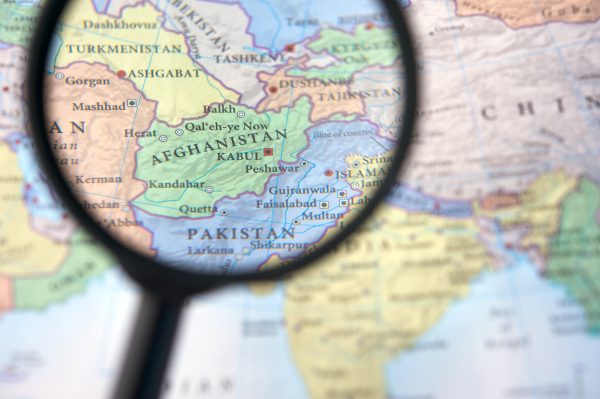
Following the Taliban’s return to power in 2021, the Central Asian states carefully recalibrated their approaches toward Afghanistan. While cooperation initially remained largely confined to bilateral economic and security issues, it has now entered a new stage of development.
In August 2025, Tashkent hosted a meeting of the Central Asian states’ special representatives on Afghanistan. This year, on April 5, the first Afghanistan-Central Asia Consultative Dialogue was held in Kabul. This initiative emerged as a new regional format aimed at institutionalizing interaction between Afghanistan and the Central Asian states. The platform effectively creates a new political and diplomatic space that brings Afghanistan and the countries of Central Asia together within a framework of regular dialogue, similar to the traditional “C5+1” mechanisms.
More recently, the second Termez Dialogue, held in Tashkent on June 4-6, 2026, further underscored Afghanistan’s role as an integral component of the broader Central Asian regional landscape. In addition, the Afghanistan-Central Asia Think Tank Forum, held in Kabul on June 16, further demonstrated growing efforts to institutionalize Afghanistan’s engagement with Central Asia and strengthen regional cooperation.
Uzbekistan is the most active Central Asian state in developing relations with the Taliban and promoting Taliban-ruled Afghanistan’s integration into the regional economic space. Despite the absence of de jure recognition of the Taliban government by Tashkent, the Uzbek leadership has adopted what it terms a “pragmatic approach,” aimed at maintaining stability through constructive dialogue, while simultaneously advancing regional connectivity through the development of transport and logistics networks and the creation of new southern transport corridors.
Humanitarian engagement also continued on a systematic basis. In March 2026, Uzbekistan delivered more than 290 tons of humanitarian aid to Afghanistan in connection with the celebration of Eid al-Fitr, the holiday marking the end of Ramadan. Subsequently, in May 2026, on the eve of Eid al-Adha, Uzbekistan dispatched another shipment of humanitarian assistance totaling approximately 215 tons, reaffirming the sustained and institutionalized nature of its humanitarian policy toward Afghanistan.
Momentum is also evident in the economic and transport sectors. In June 2026, Uzbekistan’s Deputy Minister of Investment, Industry and Trade Shokhrukh Gulyamov announced that the preparation of the feasibility study for the Trans-Afghan Transport Corridor had entered an active phase. According to him, field research activities have already commenced as part of the project, and detailed technical and economic assessments are expected to be submitted to the participating governments by the end of the year.
Afghanistan-Kazakhstan relations have gradually moved beyond episodic engagement and have increasingly acquired an institutionalized and long-term character. In April 2026, Kazakh officials announced plans to increase bilateral trade from its current level of approximately $500 million to $3 billion. Key priorities to achieve this objective include the development of transport infrastructure, the creation of new logistics corridors, and the expansion of investment cooperation. Railway and transit projects occupy a central place in this process.
Earlier, in April 2025, Kazakhstan and Afghanistan signed a memorandum of intent on the development of the Turgundi-Herat-Kandahar-Spin Boldak railway line. The intensification of railway cooperation is also directly linked to the expansion of trade and economic ties between the two countries. In the first quarter of 2026, the volume of rail freight transportation between Kazakhstan and Afghanistan increased by 77 percent compared to the same period of the previous year, reaching 1 million tons.
Afghanistan-Tajikistan relations have evolved from a framework focused primarily on security concerns toward one that increasingly incorporates diplomatic engagement. Nevertheless, Tajikistan continues to place particular emphasis on strengthening security along its Afghan border, particularly given occasional incidents such as the targeting of Chinese workers last year by attackers allegedly originating in Afghanistan. In March 2026, the Tajik parliament approved the implementation of a China-financed project worth $57 million aimed at developing new border infrastructure along the Afghan-Tajik frontier.
At the same time, diplomatic engagement between Dushanbe and Kabul has also intensified. In February 2026, Tajik Foreign Minister Sirojiddin Muhriddin said that the country’s security agencies maintain regular working contacts with representatives of the Taliban in order to reduce tensions in border areas. In the same month, Tajikistan’s ambassador to Kabul, Saadi Sharifi, met with the Taliban’s Foreign Minister Amir Khan Muttaqi to discuss the establishment of a joint economic commission and the coordination of cooperation on border-related issues.
Although relations between Kyrgyzstan and Afghanistan remain less developed compared to Afghanistan’s relations with other Central Asian states, recent years have witnessed a noticeable intensification of Bishkek’s policy toward Afghanistan. One of the most significant developments within this process was the opening of the Kyrgyz Trade House in Kabul in December 2025. The platform, inaugurated with the participation of Kyrgyz Minister of Economy Bakyt Sydykov and Taliban Minister of Industry and Commerce Nooruddin Azizi, is intended to promote Kyrgyz products in the Afghan market, facilitate direct business contacts, and expand investment cooperation. The Afghan-Kyrgyz Business Forum, held in Kabul in December 2025, likewise demonstrated that bilateral cooperation had entered a qualitatively new stage of development.
The central element of Afghan-Turkmen cooperation remains the TAPI (Turkmenistan-Afghanistan-Pakistan-India) gas pipeline project. In October 2025, a ceremony marking the start of construction of the Serhetabat-Herat section of the pipeline was held in the city of Herat. The event was attended by Gurbanguly Berdimuhamedov, former president and current chairman of the Halk Maslahaty of Turkmenistan.
The Turkmen leadership views TAPI not only as an energy initiative but also as a strategic platform for deepening regional economic integration. In February 2026, a high-level meeting took place in Herat between delegations led by the Taliban’s Deputy Prime Minister Mullah Abdul Ghani Baradar and Turkmen Foreign Minister Rashid Meredov. The talks focused on the implementation of the TAPI gas pipeline, the TAP power transmission project, the Turgundi-Herat railway project, electricity exports, and trade and economic cooperation.
Reasons for the Deepening of Afghanistan’s Engagement With Central Asian States
The growing rapprochement between the Central Asian states and Afghanistan is driven not only by initiatives originating from the region itself, but also by Kabul’s increasing interest in closer cooperation. Whereas the Taliban’s foreign policy priorities were previously focused primarily on Pakistan, Iran, the United States, and the Arab states, Central Asia has now emerged as one of the key directions of the Taliban’s foreign policy. A number of geopolitical and economic factors explain this shift.
Following the Taliban’s return to power, Afghanistan has continued to operate under conditions of international isolation, limiting its ability to attract investment and expand international cooperation. Under these circumstances, the Central Asian states have emerged as important regional partners for Kabul, enabling it to maintain external economic and diplomatic ties.
Furthermore, the deterioration of the Taliban’s relations with Pakistan, driven by border disputes, security concerns, and the periodic closure of border crossings, has increased Afghanistan’s need to diversify its trade and transit routes. As a result, Uzbekistan and Turkmenistan are assuming growing importance as alternative logistical corridors.
Afghanistan’s economic recovery requires bot just trade, but the implementation of major infrastructure projects, including the Trans-Afghan Railway, the TAPI gas pipeline, and the CASA-1000 project. The realization of these initiatives is impossible without close cooperation with the Central Asian states, which gives these relationships a strategic dimension.
In addition, the policies pursued by the Central Asian states, which continue to engage in trade, economic cooperation and dialogue with Afghanistan despite the absence of formal recognition of the Taliban’s government, contribute to further rapprochement. Afghanistan is increasingly portrayed as part of the historical and economic space of Central Asia.
Relations between the Central Asian states and Taliban-ruled Afghanistan have entered a qualitatively new stage of development in recent years. Whereas cooperation at the initial stage in 2021 was largely confined to issues of security, border management, and short-term economic interests, interaction is now acquiring an institutional and regional character. The development of cooperation is supported not only by the initiatives of the Central Asian states but also by the Taliban authorities, indicating that these relations are being shaped on the basis of mutual interest and shared practical objectives.
