

The Russian invasion of Ukraine in February 2022 was met with sweeping sanctions from the G7 and the EU. Those sanctions have been in place for nearly four years already, with surprisingly little impact on Russian seaborne crude exports. New buyers from China and Africa have largely absorbed rerouted exports. Initially, oil revenues to Moscow declined after the implementation of the embargo. Exports to Price Cap Coalition countries, the group of countries that aligned to restrict Russian oil on global markets, dropped by 59.5 million tons. Yet, despite this, exports to non-Price Cap Coalition countries rose by an astounding 65 million tons. The outcome highlighted a broader geopolitical reality: Western control over shipping, finance, and insurance is no longer sufficient to fully constrain global commodity flows once alternative trading hubs emerged outside traditional regulatory reach. This underscores the ongoing fragmentation of global energy trade as a result of the impact of intermediary jurisdictions, with implications for Asian policymakers and maritime economies such as Singapore.
The disparity exposes a structural challenge to policymakers Western aligned nations. The reality is that Russian oil continues to be traded legally through a complex web of fragmented trading enterprises. Each step along the web essentially reconstitutes sanctioned oil into the market. Companies and ships transfer ownership of Russian oil across jurisdictions through what can only be defined as regulatory arbitrage, and the net effect of which, reintegrates sanctioned oil into global markets while ultimately returning revenue to Moscow. Understanding this pattern is important for understanding the limitations of sanctions in an increasingly multipolar trading system, with commercial networks in place that extend well beyond traditional Euro-Atlantic regulatory frameworks.
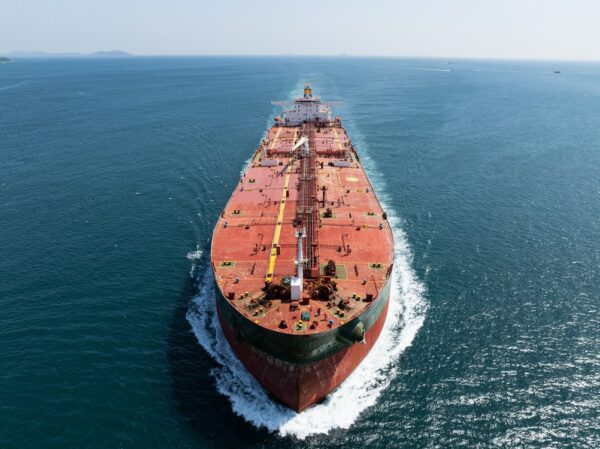
Key trading zones with low regulatory oversight, like Dubai’s free zone, have allowed for commodities traders to continuously adapt to the G7 and EU’s price cap controls. The sanctions initially targeted shipping, financing, and insurance. In response, the use of a “shadow” fleet was employed. Earlier this year the FT revealed this to be comprised of 1,065 vessels, alongside intermediaries facilitating the transport of almost 100-billion-dollars-worth of Russian, Iranian and Venezuelan crude oil to buyers across the world, using ships that lack up-to-date licensing, are able to manipulate GPS trackers and are generally uninsured. The adjustment to using a shadow fleet took roughly 18 months, but now exports have returned to near the original volumes of 2022.
Sanctions were subsequently structured on controlling specific Western trading nodes, but the role of shipping logistics is to find ways around such trade barriers. Dubai’s free zones have provided a major workaround for Russian oil. One such zone, the Dubai Multi Commodities Centre (DMCC), boasts many incentives for business growth, such as a 0% corporate income tax and flexible licensing options. These free zones have been instrumental in facilitating trade across the world and contributing to substantial energy market growth.
Before 2022, the DMCC primarily processed gold, diamonds, and agricultural commodities. After the war broke out, however, the trade of oil commoditiesincreased notably, according to the US Treasury. Low regulation, corporate opacity, and a separate jurisdiction from enforcement led by the G7 and its partners, all factors good for multi-national trade, suddenly became an opportunity for the regulatory arbitrage of Russian oil. By early 2023, an astounding 25% of identifiable Russian oil cargo buyers were linked to entities within Dubai’s free zones. That position has given Dubai growing geopolitical importance as an intermediary hub between sanctioned Russian producers and non-Western buyers. The development was also reflective of a broader shift of commodity trading activity toward Asia in light of significant demand growth and the need for commercial connectivity which would continue to shape global energy flows.
The business-friendly environment allows companies like Rosneft and Lukoil, which were critically sanctioned in October 2025, to find and quickly incorporate successor entities. For example, Lukoil quickly incorporated Alghaf Marine DMCC, obtained a trading license, but was soon sanctioned again. The rapid transition from Litasco Middle East DMCC to Alghaf Marine DMCC demonstrated how quickly sanctioned trading infrastructure could reconstitute itself within the free zone system. Companies like this transfer institutional knowledge rapidly through their own leadership, by hiring full teams from previously sanctioned companies. The fragmented system that keeps Russian oil flowing relies on relationships, documentation expertise, and individual logistics networks that can be transferred from one entity to the next by moving corporate teams.
Companies such as Forteza Trading DMCC and Patera Middle East DMCC emerged within this environment despite having little visible pre-war trading history. Their significance came less from corporate scale than from the experienced traders and operational personnel behind them, many with backgrounds at major commodity firms. For example, members of the Tricon Energy’s Brazilian corporate finance team moved together to Fortezza Trading DMCC. Tricon has a long, and often problematic, trade history with Brazil. In this regard, the co-founder of a Brazilian biodiesel company Bio Clean Energy, filed a civil RICO suit in New York against U.S., Tricon Energy and a number of otherdefendants, with the nature of the suit listed as racketeering. This was as a result of company links to a scheme operated by the Primeiro Comando da Capital (PCC), Brazil’s most powerful criminal faction
Indeed, the movement of senior employees from one company to another, brought a wealth of high-level information to Fortezza, a company, among others based in Dubai, that has stepped in to facilitate the trade of Russian oil where European traders could not. While there is no direct evidence of sanctions violations, the pattern illustrates how knowledge transfers remain key components across jurisdictional boundaries.
Experienced traders are able to manage logistics effectively. Take the example of a fictional cargo of Urals crude oil being loaded at a Russian port. On paper, it is sold to a DMCC-registered entity, but before discharge, it may be sold again between different companies within the free zone. By the time the crude reaches its destination, the original contractual chain is fragmented across jurisdictions. Thus, the implementation of sanctions remains a challenge, given the inability to identify the party wholly responsible for their violation. With major trading hubs like Singapore placing transparency and compliance as issue which are paramount to commodities traded in their jurisdiction, fragmented ownership structures prove to be a major stumbling block in the way of due diligence and sanctions enforcement.
Physical constraints to sanctions tracking obscure sanctions efficacy as well. Ships will sometimes transfer oil in international waters from ship to ship. The Malaysian government only a few weeks ago, highlighted the way in which Iran was exploiting such ‘jurisdictional gaps’ to conduct ship-to-ship transfers of sanctioned oil near its waters. With no single group able to have complete visibility over the full chain of trading, comprehensive oversight remains inadequate. Each transaction may comply with sanctions restrictions, but at completion, the oil still moves through the market unsanctioned.
Attempting to sanction Russian oil over the course of almost four years, and failing in terms of drastically reducing revenues or eliminating Russian oil from the market, should inform clear lessons for sanctions policy going forward. Sanctions require coordination, a feature strained by jurisdictional fragmentation. They also rely on systems tracking vessels and trading compliance, which often misses potentially problematic entities and struggles to keep up when parallel infrastructure emerges, like in the DMCC. More broadly, the post-2022 oil trade revealed the growing geopolitical influence of intermediary jurisdictions capable of operating between rival regulatory systems. The current sanctions architecture relies on the assumption that maritime trade can be controlled through cooperation and coordination. Skilled commodities traders and private sector entities, have highlighted the ongoing challenge to that clearly wrong assumption. Singapore must consider the implications from the emergence of a more decentralized global trading environment in which private commercial networks and regulatory arbitrage play and increasingly central role. With energy flows functionally outside the reach of any single sanctions regime, or supranational entity, the risks of continuing to operate within the constraints of what we can only define as the old system, are too great to ignore.
