

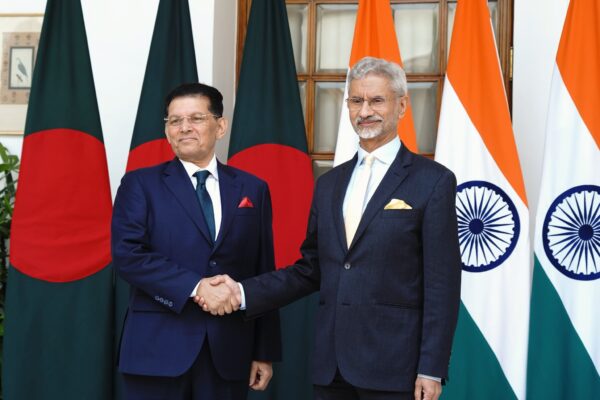
Following a prolonged period of strain in bilateral ties through much of last year, India-Bangladesh relations appeared to be looking up when the two sides vowed in April to reset ties. However, the recent mistreatment of Zahed Ur Rahman, an adviser to Bangladeshi Prime Minister Tarique Rahman, by Indian officials in New Delhi, which led to the Bangladeshi government summoning the Indian Deputy High Commissioner to formally lodge a protest, reveals how lingering mistrust continues to derail bilateral relations between the two neighbors.
This is the second time that the Bangladesh foreign ministry has called in the Indian mission in Dhaka since Tarique Rahman’s government took office in February 2026. Following what Bangladeshi officials termed as “disparaging” remarks by Assam Chief Minister Himanta Biswa Sarma regarding India’s policy on infiltrators, the acting Indian high commissioner was summoned by the Bangladeshi government last month.
Zahed Ur Rahman was travelling to Delhi for a meeting of senior officials of the Indian Ocean Rim Association. He was initially denied entry into India by immigration authorities at the airport. According to Rahman’s account, he was kept waiting at the airport for “nearly two and a half hours” after which he was cleared for entry.
Bangladeshi newspapers report that the clearance came only after intervention from higher authorities in Delhi. Despite the clearance, Rahman decided to return to Dhaka, as a mark of “instant protest” against what Bangladeshi officials described as a “humiliating event.” Speaking about the incident at a press conference in Dhaka, Rahman clarified that he was not “mistreated” or “harassed” by Indian authorities, but reiterated that it was an “unwanted situation.”
At the time of writing, there has been no official statement from the Indian government on the incident. Some Indian news sources attribute the incident to an administrative error, due to which Rahman’s name showed up on an immigration watchlist, which was later identified and resolved. Indian sources also claim that Rahman was travelling on his personal passport with a SAARC visa sticker, instead of a diplomatic passport, which added to the confusion, resulting in the long delay.
It may be tempting to dismiss Rahman’s remarks as provocative rhetoric, which has become a routine feature of bilateral ties, at least in recent years. While this incident itself is unlikely to become the primary friction point in the relationship, it could add fire to simmering anti-India sentiments in Bangladesh. This is already evident with editorials in prominent Bangladeshi newspapers calling for India to “provide satisfactory explanation” and “acknowledge its failure to follow protocol” in response to Rahman’s “harassment.”
Such sentiments were already heightened by recent remarks made by India’s high commissioner designate Dinesh Trivedi that “India and Bangladesh share the same sky, the same air, the same pain…” which many in Bangladesh interpreted as a reference to the idea of Akhand Bharat, which roughly translates to a “Greater India,” a reference to an undivided India of pre-colonial times. A rather innocuous remark about a shared sky was quickly pounced upon by the Jamaat-e-Islami (JeI), Bangladesh’s main opposition party, which demanded that the government seek an explanation from the Indian envoy for his remarks.
Since the victory of India’s ruling Bharatiya Janata Party in the West Bengal assembly elections, the crackdown on undocumented migrants has intensified. Many in Bangladesh claim a significant uptick in “push-ins” or what India calls “push back” of illegal Bangladeshi migrants along the border. Dhaka has framed it as an international humanitarian concern. While this issue and other border-related concerns were discussed at the recent Director-General-level talks between the Border Security Force and Border Guard Bangladesh held in Delhi held from June 8-11, there is palpable angst in Dhaka. Nevertheless, JeI organized protests in border districts and in Dhaka on June 12 and June 15 against India’s alleged push-in policy, demanding stricter action from Dhaka against India.
The incident involving Rahman also highlights another enduring strain in bilateral ties: Sheikh Hasina’s continued stay in India. At the press conference, Rahman said that his decision to return to Dhaka was to send a “message…both inside and outside the country that this is not Sheikh Hasina’s government. This is a government with a mandate from the people.” Despite hollow reassurances from some members of the ruling Bangladesh Nationalist Party that Hasina’s presence in India will not deter broader bilateral cooperation, the issue remains a sticking point that is repeatedly raised by the Bangladeshi side at the highest levels of interaction.
India has made several goodwill gestures, such as the participation of Lok Sabha Speaker Om Birla in the swearing-in ceremony of Tarique Rahman in February. Senior government officials also celebrated an event marking Bangladesh’s National Day in New Delhi and highlighted the shared culinary heritage, which is being touted as “golgappa diplomacy.”
Such gestures reflect a desire in Delhi to reset ties with Bangladesh — a neighbor with which India shares a long border and deep civilizational ties.
However, thorny issues persist. India is yet to restart transshipment services for goods from Bangladesh, remove restrictions on market access for Bangladeshi goods and fully resume visa operations in Bangladesh. India had imposed these measures during the previous interim government, when bilateral relations unraveled.
The delay on India’s part to lift these measures now that a new government is in place in Dhaka only serves to aggravate anti-Indian sentiments within the existing Bangladeshi government and the Bangladeshi people. The longer Delhi fails to reverse these decisions, the deeper will be the bilateral rift.
India’s waning influence in Dhaka and steady alienation of the public have opened space for regional rivals, such as China, to occupy the vacuum.
The BNP government is assiduously pursuing a “Bangladesh First” foreign policy, which prioritizes Bangladesh’s independence, national interest, and public welfare.
New Delhi will have to focus on rebuilding trust with Dhaka, else it risks being reduced to a secondary actor in Bangladesh’s foreign policy priorities.
Next week, Rahman will visit Malaysia and China. Meanwhile, bilateral problems are standing in the way of his visit to India. His decision to visit China rather than India sends a powerful message about which way Dhaka is leaning.
