

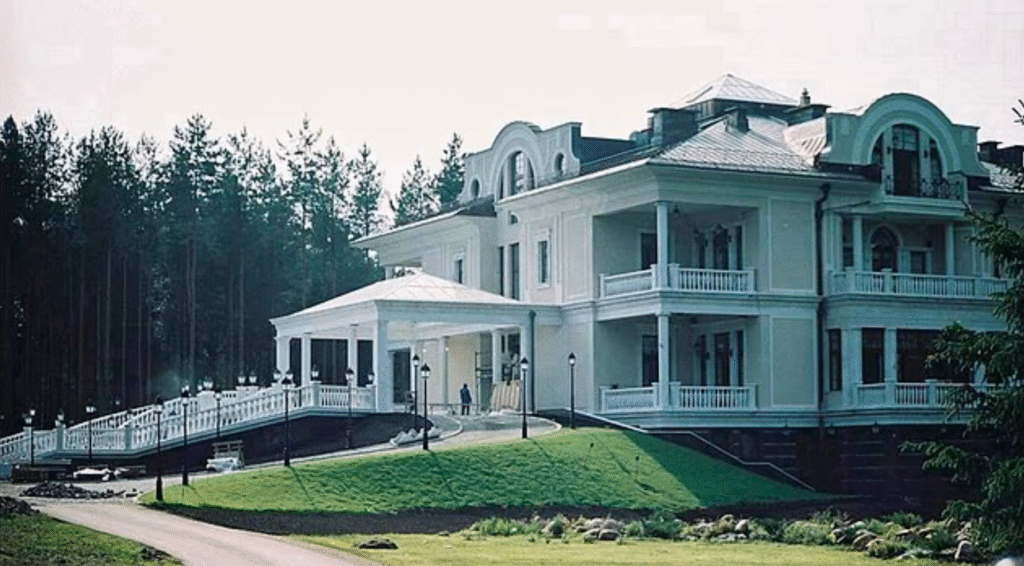
Russia has built a new ring of air defence towers around President Vladimir Putin’s residence in Valdai as it seeks to protect the estate from Ukrainian drone attacks.
Satellite imagery has identified 16 additional towers, bringing the reported number of air defence positions around the presidential estate in north-western Russia to more than 50.
The new installations are concentrated south of the residence, within a 50-kilometre radius, and appear to form an outer defensive perimeter facing Ukraine.
Investigators believe the elevated platforms could accommodate Pantsir or Tor surface-to-air missile systems, although their precise military purpose has not been independently confirmed.
The findings were published by Radio Free Europe/Radio Liberty’s (RFE/RL) Russian Service following an analysis of satellite imagery conducted by its journalists and open-source intelligence (OSINT) researcher Jembobineuse.
The researcher wrote on X: “It is autumn in Valdai, and time for the latest manifestation of Putin’s paranoia.”
The latest structures extend beyond earlier installations concentrated closer to the estate, providing another potential defensive layer against drones approaching from the south.
Investigators have not identified corresponding new positions along the northern section of the outer perimeter, raising the possibility that construction could continue.
The expansion also encompasses Khotilovo military airbase, which Putin reportedly uses for presidential travel, and the Vyshny Volochyok Reservoir.
The reservoir area includes Lisiy Island, where Russian military authorities have constructed a laboratory complex.
RFE/RL previously reported that the facility could be associated with Russia’s biological weapons research programme, although its precise purpose remains unconfirmed.
The expanded air defence network could therefore protect nearby military and strategic facilities as well as the presidential residence.
More than 50 positions have now been identified around Valdai, approximately half the number constructed across Moscow and the surrounding Moscow Oblast since Russia launched its full-scale invasion of Ukraine in February 2022.
Fewer than 100,000 people live in the surrounding Valdai area, compared with more than 20 million across Moscow and its wider region.
The latest construction follows several phases of security upgrades around the presidential estate.
A Pantsir-S1 air defence system was first identified near the residence in January 2023, followed by another installation in July 2024.
By March 2026, satellite imagery had revealed seven additional towers, bringing the total to 27.
Residents living near Valdai have also described continuing military construction.
A local resident, quoted by the Daily Mail, said: “See that tower? They’ve brought in a lot of soldiers – they’re building things there, constantly building.”
A teacher in the nearby village of Roshchino also described the operation of equipment believed to be part of the air defence network.
The teacher told the newspaper: “That’s the air defence system – you wouldn’t recognise the sounds.
“If it’s spinning, it means there’s no immediate danger overhead. If it stops, it means something is flying over us.”
Elevated platforms can improve the detection of low-flying drones by reducing interference from surrounding trees, buildings and terrain.
Russia’s Pantsir-S1 combines surface-to-air missiles with automatic cannons and is designed to intercept aircraft, cruise missiles and unmanned aerial vehicles.
The Tor system provides short-range protection against aerial threats, including drones and precision-guided weapons.
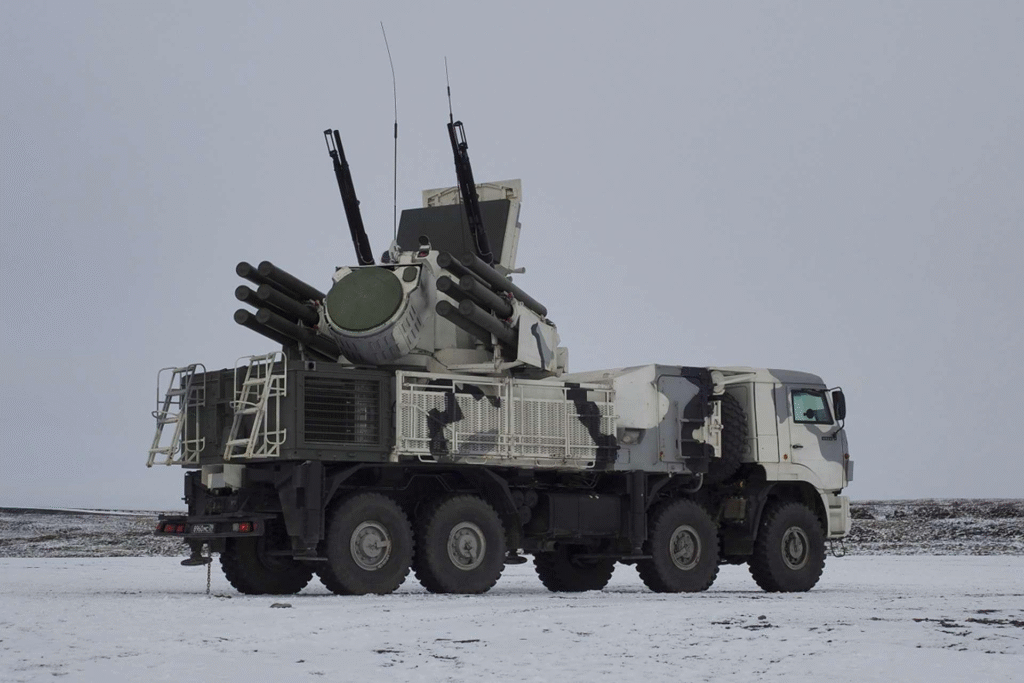
However, the presence of a tower does not establish whether an operational missile system has been installed or whether the position is continuously manned.
Jembobineuse cautioned that “the towers are not yet confirmed!”
The expansion follows Russian allegations in December 2025 that Ukraine attempted to attack Putin’s Valdai residence with drones.
Russian officials accused Kyiv of launching more than 90 drones towards the estate, claiming that all were intercepted without casualties or damage.
Ukraine denied targeting the residence.
President Volodymyr Zelenskyy described the allegation as a “lie” and accused Moscow of attempting to undermine US-mediated negotiations aimed at ending the war.
According to reporting by the Kyiv Independent, the CIA informed President Donald Trump that Ukrainian forces had targeted a military installation elsewhere in the region rather than Putin’s residence.
The Kremlin’s allegation has not been independently substantiated.
Other security measures have reportedly been introduced around the estate, including restrictions on drone flights and access to surrounding areas.
In June, Russian mapping service Yandex obscured satellite imagery covering approximately 1.3 square miles of the presidential property.
Anti-drone netting was also reported above lorry parking areas near the M10 motorway, prompting comparisons with Ukraine’s Operation Spiderweb, which used drones concealed in lorries to attack Russian military airfields.
The latest satellite findings indicate that Moscow continues to strengthen protection around Putin’s residence as Ukrainian long-range drones pose an increasing threat to military and strategic targets deep inside Russia.
