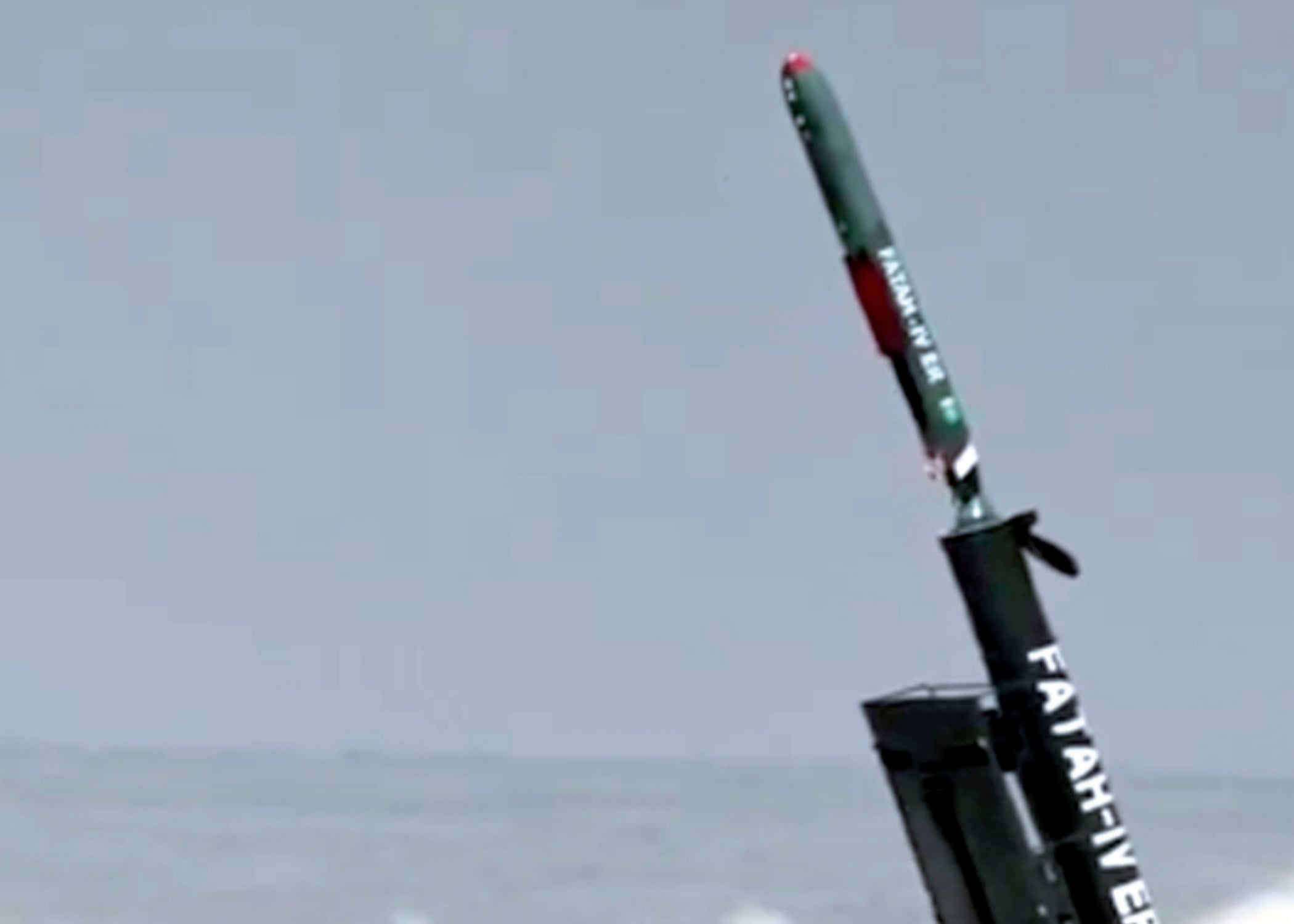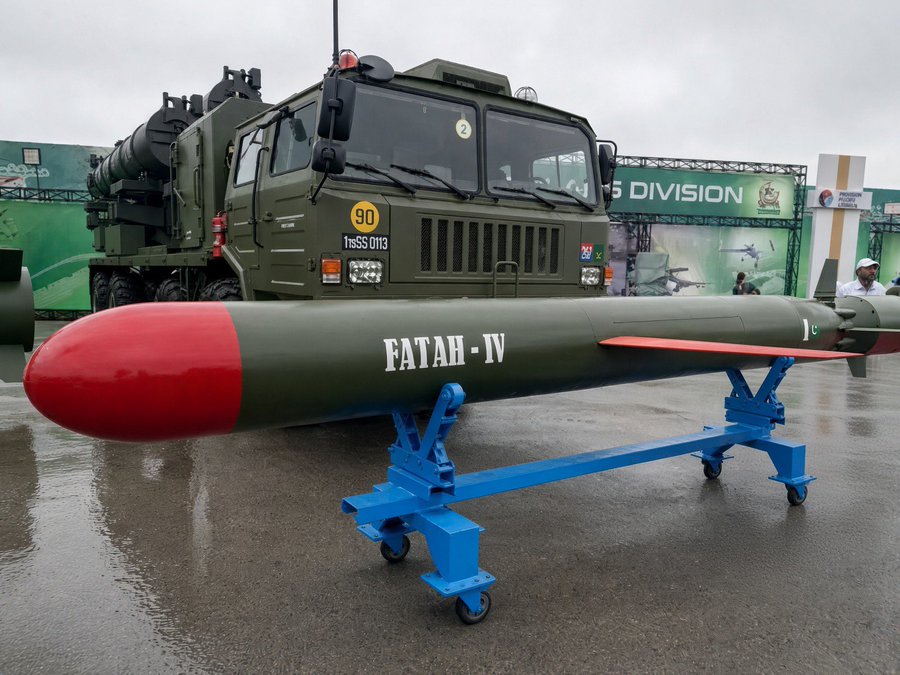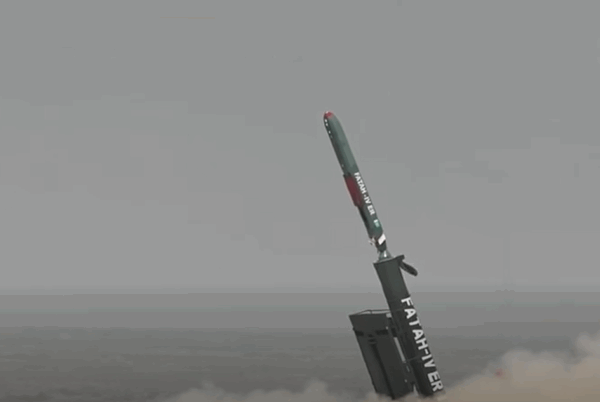
On October 6, Pakistan tested an extended range (ER) version of the Fatah-IV ground-launched cruise missile. This was the third launch of the Fatah-IV missile system, the last having been conducted in May 2026. The latest test is unique compared to the first two, because this time the missile had a reported range of more than 750 kilometers.
The Fatah-IV is a byproduct of the 2025 India-Pakistan clashes. The missile was first unveiled publicly during Pakistan’s Independence Day event on August 14, 2025. It features terrain-hugging flight capability intended to reduce radar detection, has a maximum speed of Mach 0.7, and carries a 330 kilogram blast-fragmentation explosive warhead.
The ER version appears to have wings positioned on the underbelly, not in the center of the missile body, as was the case in its earlier version. The ER missile also appears slightly larger to store more fuel, allowing it to cover a longer distance than its reported 750 km range. Based on available imagery, the Fatah-IV ER could have a range of around 1,000 km.
What are the key rationales behind Pakistan testing the ER version of Fatah-IV? There seem to be quite a number of possibilities. First, Pakistan is likely looking to counter the Indian Air Force’s (IAF) future strategy of launching air-launched missiles from standoff ranges. It remains a strong possibility that the IAF will move its assets to rear bases in the next encounter with the Pakistan Air Force (PAF) because the IAF does not want to repeat what happened on the night of May 6-7, 2025, when it lost multiple jets in air-to-air engagement with the PAF. Therefore, the IAF will likely launch payloads from a distance beyond the range of both PAF air-to-air missiles and Pakistan’s long-range land-based missile defenses.
The IAF will be able to conduct such strikes in the future because the Indian government has already sanctioned an increase in range of the BrahMos supersonic cruise missile, with reports estimating the new range to be around 800 km. This posed a serious challenge to Pakistan because the Taimoor air-launched cruise missile and other conventional systems available in the country’s arsenal remained inadequate to threaten IAF installations located deep inside mainland India. The ER Fatah-IV will fill this gap by enabling Pakistan to strike radars and the fighter jet fleet of the IAF deployed at bases far away from Pakistan’s border.
Second, India’s key metropolitan cities and commercial hubs are located in southern and central India, far away from Pakistan’s border. By contrast, Pakistan’s major urban hubs are all located relatively close to India. This previously provided New Delhi an advantage over Islamabad, as India could target Pakistan’s commercial hubs with conventional munitions. However, with the introduction of the Fatah-IV, India’s main business metropolis, Mumbai, from now on will come within range of Pakistan’s conventional strike force, thus posing a credible threat to the Indian business capital.
The ER Fatah-IV will allow Islamabad to dissuade India from launching conventional counter-value strikes against Pakistan’s key cities because New Delhi’s own central commercial hub can be targeted in a similar manner. India is likely to remain dissuaded from approaching such a path in a limited confrontation with Pakistan because missiles striking Mumbai will not only create negative international headlines but also damage the morale of the people and investors in India.
Third, in the post-Operation Sindoor era, the Indian military ordered more air defense systems including the S-400, tested new ones like the Kusha long-range interceptor, and announced the integration of all of them under the aegis of Mission Sudarshan Chakra to formulate an impenetrable missile defense shield. To penetrate such a shield and strike targets at longer range, Pakistan will need systems to avoid radar detection. The Fatah-IV fulfills this requirement, thus posing a credible threat to Indian military installations and dissuading New Delhi from ordering pre-emptive military strikes against Pakistan.
Pakistan’s official policy eschews any arms race. The ultimate objective behind the development of the ER Fatah-IV is to strengthen Pakistan’s conventional deterrence vis-à-vis India. The development of the Fatah-IV did not occur in a vacuum; it became a compulsion after India launched “unprovoked” attacks against multiple locations inside Pakistan in May last year. The episode was the turning point for Pakistan. It led to the introduction of the conventionally armed Fatah-IV cruise missile because Islamabad wants to further reinforce its conventional counterforce strike capabilities.
The development of one system does not guarantee deterrence; however, the intent and posturing matter. By introducing the Fatah-IV and continuously developing it, Islamabad is signaling to New Delhi that the old days are gone now. Indian military installations located deep inside the country are no longer safe from Pakistan’s conventional missile force.
The ER Fatah-IV exists to protect Pakistan’s national security at a time when India believes that territorial victory remains the ultimate goal in modern conflict, as evident from the recent statement of India’s army chief General Dhiraj Seth. In the presence of such a belligerent mindset of the adversary, it becomes a compulsion for the other side to take appropriate defensive measures. The Fatah-IV is one such measure taken by Pakistan to boost the country’s defense and to protect its territorial sovereignty.