

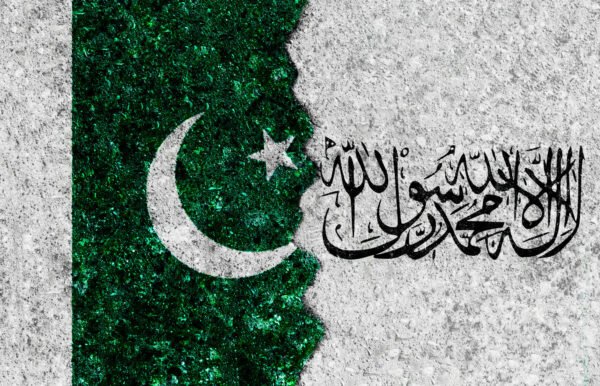
On October 11, Pakistan’s military reported that security forces had killed 12 militants and Afghan Taliban personnel during an attempted crossing from Afghanistan into Pakistan’s Kurram district. A Pakistani soldier was also killed in the exchange of fire. The Inter-Services Public Relations (ISPR), the military’s media wing, said Afghan Taliban border posts had opened fire in support of the attempted crossing.
The incident came 10 days after Pakistani airstrikes in Afghanistan, which Islamabad said targeted militant camps and hideouts. Pakistan reported that the strikes killed 22 militants. At the same time, the United Nations Assistance Mission in Afghanistan (UNAMA) confirmed that at least 10 civilians, most of them children, were killed and nine injured in Kunar and Helmand provinces. The U.N. mission called for de-escalation and greater protection of civilians, underscoring the humanitarian risks of continued cross-border hostilities.
These incidents reflect a wider deterioration in Afghanistan-Pakistan relations, driven in part by Islamabad’s concerns about militant groups operating from Afghan territory.
On September 18, a suicide car bombing at a mosque inside the Kohat Police Lines complex in Pakistan’s Khyber Pakhtunkhwa province, followed by an armed assault, killed at least 31 people, including 16 police personnel, and injured more than 100, according to local police officials. Ittehadul Mujahideen Pakistan (IMP), a militant alliance linked to the Hafiz Gul Bahadur faction, claimed responsibility for the attack. The IMP operates within the broader network of militant groups active along the Afghanistan-Pakistan border and has had links with the Tehreek-e-Taliban Pakistan (TTP), a militant umbrella organization waging an insurgency against the Pakistani state.
The scale of the threat is reflected in the 2026 Global Terrorism Index, which ranked the TTP as the world’s third-deadliest terrorist organization in 2025. The index identified rising violence by both the TTP and the Balochistan Liberation Army (BLA) as contributing to Pakistan’s worsening security environment. Islamabad has maintained that the Afghan Taliban authorities are allowing the militant outfits, including the TTP and the BLA, to maintain sanctuaries in Afghanistan, an allegation Kabul denies.
The Kohat attack was just one manifestation of a broader security dispute that has strained Afghanistan-Pakistan relations for years. In 2022, shortly after the Taliban returned to power in Afghanistan, Pakistan negotiated with the TTP through mediation by Afghanistan’s Taliban authorities. They reached a ceasefire in June 2022, but the agreement collapsed in November, when the TTP announced a resumption of attacks across Pakistan.
A February 2023 U.N. Security Council monitoring report cited assessments by several member states that the Taliban’s return to power in Afghanistan had emboldened the TTP and contributed to an escalation in its attacks against Pakistan. The report also examined links between the TTP and other armed groups. Subsequent U.N. Security Council monitoring reports have provided further support for Pakistan’s security concerns. A July 2024 report noted that the TTP continued to operate from Afghanistan and conduct attacks inside Pakistan, citing member states’ assessments of Taliban tolerance and support for the group. The December 2025 report went further, describing the continued harboring of TTP leaders in Afghanistan and the facilitation of the group’s operations by the Taliban authorities.
As concerns about cross-border militancy persisted, Islamabad pursued a parallel response at home. In June 2024, the government approved Azm-e-Istehkam, a national framework intended to strengthen intelligence-based operations and law enforcement. However, domestic counterterrorism measures have not resolved the cross-border dimension of the threat.
Regional diplomacy has struggled to bridge the divide between Islamabad and Kabul. The eighth Moscow Format Consultations on Afghanistan, held on October 5, offered a recent example of this impasse. The meeting brought together Afghanistan and regional powers, including Pakistan, China, India, Iran and Russia, to discuss security and regional cooperation. It ended without a joint statement after the Pakistani and Afghan delegations struggled to agree on the language concerning terrorism. Pakistan’s Special Representative for Afghanistan, Mohammad Sadiq, emphasized the threat posed by militant groups operating from Afghan territory, while the Afghan Taliban delegation resisted the proposed wording. The disagreement illustrated a fundamental obstacle: the two sides have yet to agree on how to define and address the security problem itself.
The Moscow impasse followed earlier attempts to ease tensions through direct negotiations. After the October 2025 fighting, Qatar and Turkiye hosted talks that produced a ceasefire, followed by further rounds of negotiations in Istanbul, Doha, and Riyadh. These efforts did not resolve the central dispute. Pakistan seeks verifiable action against the TTP, while the Afghan Taliban authorities deny that the group operates from their territory in the manner Islamabad alleges. Without agreement on the underlying security concerns, diplomatic engagement has struggled to produce a durable settlement.
Economic ties have suffered as a result. In January 2026, Pakistani and Afghan traders agreed to establish a joint committee to discuss reopening border crossings. However, commercial negotiations could not overcome the wider security impasse. Since the October 2025 clashes, Pakistan has kept its border crossings with Afghanistan closed to trade – by far the longest closure in recent decades, disrupting a key transit route into Central Asia. The economic burden has fallen on traders and transporters on both sides, while Afghanistan has sought to diversify its trade through Iran, India, and other regional partners.
The costs of confrontation are therefore not confined to the security domain. Prolonged border closures disrupt livelihoods and commercial networks, while airstrikes and armed clashes expose civilians to further harm. The biggest challenge is to prevent the security dispute from becoming a self-reinforcing cycle in which militant violence prompts punitive measures, those measures deepen bilateral hostility, and deteriorating relations make cooperation against militancy even more difficult.
Breaking this cycle requires practical measures rather than competing declarations. First, Pakistan and the Afghan Taliban authorities could establish a verification mechanism, facilitated by a mutually acceptable third party such as Qatar, Turkiye, or China, to investigate specific allegations of militant activity and assess compliance with security commitments. Second, trade routes could be reopened gradually against measurable security benchmarks, linking economic recovery to demonstrable progress. Third, regional powers could support a sustained counterterrorism dialogue focused on information-sharing, specific incidents, and border management. Such targeted cooperation may offer a more realistic starting point than broader diplomatic forums where disagreements over the nature of the threat continue to prevent consensus.
