

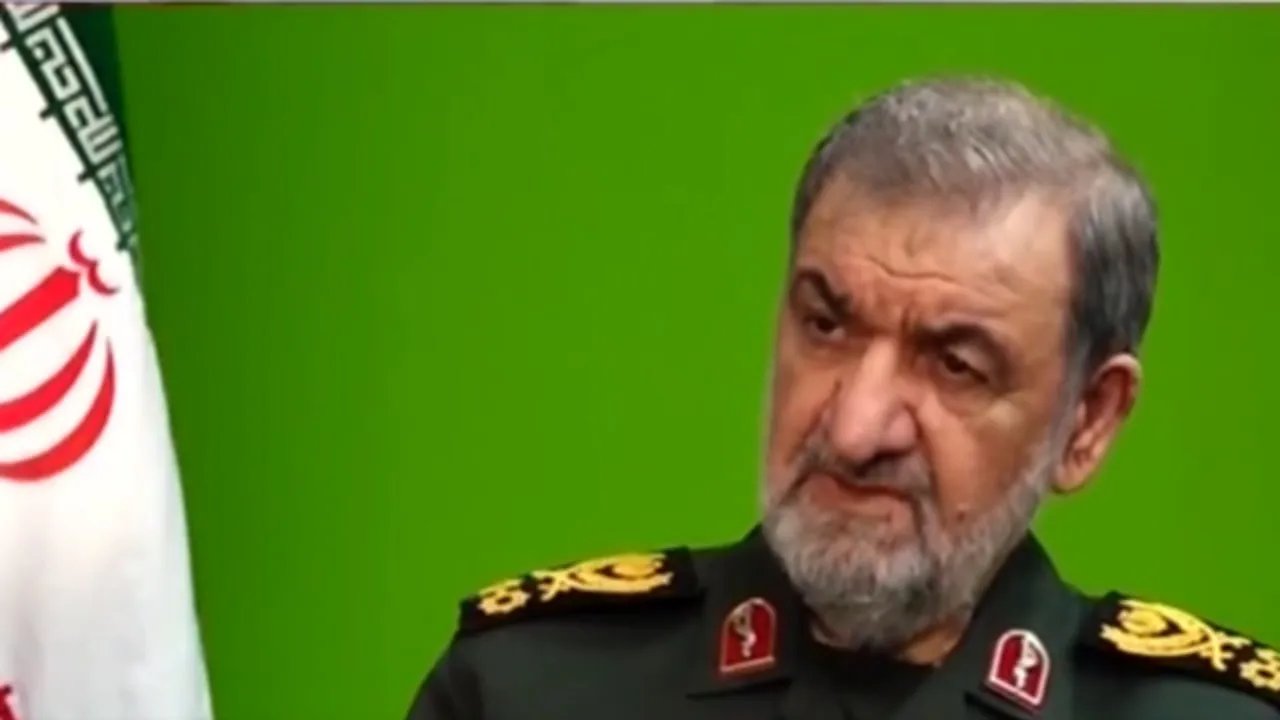
Iran prepared plans to strike three targets in Ukraine before abandoning the operation after Kyiv offered what Tehran described as an apology for a deadly attack on an Iranian vessel, a senior adviser has claimed.
Mohsen Rezaei, a senior adviser to Iran’s leadership, said Iranian forces had completed preparations for retaliatory attacks after the ship was hit in the Caspian Sea on 25 July.
“We were set to strike three sites in Ukraine, but cancelled the attack following Ukraine’s apology,” Rezaei told Iranian state television. He gave no details of the targets and produced no evidence that an attack had been authorised or was imminent. His account has not been independently verified.
The disclosure suggests that Iran and Ukraine came close to a direct military confrontation as the wars in eastern Europe and the Middle East increasingly overlap.
Tehran claimed the Ukrainian strike caused an explosion aboard an Iranian commercial vessel, killing one sailor and injuring another. Iran’s foreign ministry condemned the incident as a “hostile and criminal” act and accused Kyiv of attempting to widen its conflict with Russia.
However, Ukrainian officials said their forces had attacked vessels in the Caspian Sea involved in transporting military cargo between Iran and Russia. President Zelensky said the operation had achieved “very strong results” against ships supporting Russian military logistics, although Kyiv did not confirm that the Iranian vessel identified by Tehran had been the intended target.
The Iranian foreign minister, Abbas Araghchi, initially warned that the attack “cannot go unanswered”. He later held talks with Andrii Sybiha, his Ukrainian counterpart, and said he had been assured that the strike had been unintentional.
“Iran does not seek escalation either, but made clear any attack on our citizens or interests is unacceptable,” Araghchi said. “There must be restitution for losses.”
Sybiha described the discussion as “frank” and said Kyiv wanted to prevent the crisis from escalating.
“I reiterated that all of Ukraine’s actions are aimed solely at defending our country from Russian aggression and were never intended to target civilian vessels or people,” he said.
Ukraine has not publicly characterised its statement as the formal apology claimed by Rezaei. Nor has Tehran identified the three sites allegedly selected for attack, leaving questions over whether the announcement was a genuine account of military planning or an attempt to portray Iran as having forced Kyiv to back down.
Relations between the countries have been hostile since Iran supplied Russia with Shahed attack drones following the full-scale invasion of Ukraine in 2022. Moscow subsequently established domestic production of the Iranian-designed aircraft and has used thousands of them in attacks on Ukrainian cities and infrastructure.
The Caspian Sea has become an important military supply route linking Iran and Russia. A direct Iranian strike on Ukrainian territory would have represented a dramatic expansion of the conflict and the first acknowledged attack by Tehran on Ukraine itself.
Rezaei’s remarks indicate that diplomacy may have prevented that escalation, but they also underline how attacks on military supply networks can draw Russia’s partners more directly into the war.
