

For a brief, surreal moment this June, the world’s geopolitical axis pivoted to Islamabad, a capital usually associated with IMF bailouts, rolling blackouts, and chronic internal instability. The signing of the Islamabad Memorandum of Understanding (MOU) on June 17, establishing a 60-day roadmap to provide a framework for ending the catastrophic Iran-U.S. war and reopening the blocked Strait of Hormuz, presents a striking paradox.
Pakistan, though facing serious economic challenges, has successfully mediated a peace framework between the world’s biggest superpower and its most defiant regional adversary.
This historic breakthrough was achieved through relentless shuttle diplomacy. Driven by the unlikely double act of Prime Minister Shehbaz Sharif and Chief of Army Staff Field Marshal Asim Munir, Pakistan managed a delicate diplomatic balancing act. It successfully brought U.S. Vice President J.D. Vance and Iranian Foreign Minister Abbas Araghchi to the negotiating table; kept suspicious Gulf monarchies, especially Saudi Arabia, with which it has a Strategic Mutual Defense pact, aligned; and assumed a key role as the intermediary everyone is willing to talk to.
While Pakistan has showed it can bring opposing sides to the table and make itself diplomatically relevant, its economy is weak. That leaves its foreign policy with little room to maneuver. The real test, then, is whether Islamabad can turn this diplomatic momentum into economic gains that will strengthen its position on the international stage over the long run.
Pakistan did not set out to become a go-between. The opportunity was the product of events in the region that left very few alternatives. By the end of 2025, U.S. relations with Iran had become increasingly fraught. At the same time, many of the usual diplomatic contacts were no longer working. Pakistan, however, still had working relationships with the main regional players. That put Islamabad in a position to help reopen conversations that others were struggling to start.
Relying on long-established military and diplomatic contacts, Pakistan became one of the few countries still able to talk across the divide. Much of the effort was kept out of public view. Munir is understood to have driven the initiative, while Sharif’s government handled the civilian diplomacy.
Just as important was the decision not to treat the crisis as a purely American-Iranian dispute. Pakistan understood that any breakthrough would unsettle Gulf capitals if they were left on the sidelines. Pakistan coordinated closely with Saudi Arabia and other Gulf partners throughout the process. According to Pakistani officials and diplomatic sources, this helped turn the focus away from the immediate confrontation and toward a wider regional interest: keeping the Strait of Hormuz open and avoiding another disruption to global energy markets.
When Vance publicly thanked Pakistan for its role in the negotiations, it was clear something had changed. For years, Pakistan had been viewed in Washington largely through the lens of counterterrorism. This time, it was being recognized for something different: its diplomatic acumen.
This emerging diplomatic centrality is even more remarkable when contrasted against Pakistan’s historically complicated relationships with both Washington and Tehran.
Pakistan and Iran have spent surprisingly little time on the same page. Their common 900-kilometer border has more often been a source of tension than cooperation. Pakistan was quick to recognize Iran’s new Islamic government after the 1979 revolution, but that early goodwill gradually faded. Sectarian differences and recurring violence linked to Baloch militant groups pushed the relationship in the opposite direction. Each side blamed the other.
As for Pakistan’s relationship with the U.S., this has always been uneasy. Although there have been times when the two countries have worked closely together, they have often barely trusted one another. During the Cold War, Pakistan became one of Washington’s key regional partners and received billions of dollars in assistance. After the terror attacks in the U.S. on September 11, 2001, the partnership was revived, and Pakistan became a key partner in the War on Terror. Once U.S. troops left Afghanistan in 2021, the relationship inevitably cooled. Afghanistan was no longer the priority it had been, and Washington’s attention shifted increasingly toward India and the wider challenge posed by China.
That history helps explain why the Islamabad MoU matters. Bringing Iran and the United States together was no small achievement, yet the practical gains for Pakistan remain unclear.
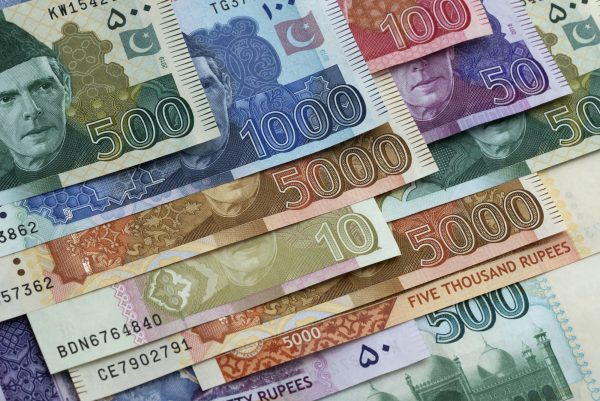
The country is still struggling to put its own economy on a stable footing. Pakistan is currently participating in a 37-month, $7 billion Extended Fund Facility approved in September 2024 to secure the release of additional funding under the agreement. Those problems limit what Pakistan can do abroad.
That is what sets Pakistan apart from middle powers such as Australia, South Korea, Turkiye, or Indonesia. Their regional influence rests on strong economies as much as on active diplomacy. Pakistan’s influence comes from its location, military establishment, and diplomatic reach, which give it a seat at the table, but its economy is still too fragile to support the same kind of long-term role.
For all the praise the MoU has attracted abroad, the real test lies at home. Unless the diplomatic momentum translates into economic improvement, its impact will be limited.
That raises an obvious question. Can Islamabad use its role in easing tensions between Washington and Tehran to improve its own economic position? In the past, strategic cooperation with the United States has often been followed by financial support, with Washington using its influence in institutions such as the IMF to help Pakistan through difficult periods.
Instead of seeking temporary financial concessions, Pakistan’s leadership must use this new diplomatic momentum to fundamentally recast its relationship with the West. The success of the Islamabad MoU provides an opening to transition the Pakistan-U.S. dynamic away from narrow counterterrorism cooperation.
Islamabad now has an opportunity to present itself as a country that can make a practical contribution to regional peace rather than simply react to events. The challenge is whether it can turn the diplomatic achievement into something more lasting. Pakistan now has an opportunity to push for deeper trade links, greater regional connectivity, and continued international support for economic reform. If that happens, the Islamabad MoU could mark the beginning of a different chapter in Pakistan’s foreign policy.
If not, it is likely to be remembered as a notable diplomatic achievement that delivered little lasting benefit for Pakistan itself. The country may have helped ease a difficult international crisis, but its own economic problems would remain unresolved.
